
Beyond Chicago: Midwest Fashion Connections and Chicago Designers Abroad
Chicago Fashion Week returns October 8–18, 2026, bringing together runway shows, exhibitions, educational programs, markets and other events across the city. [Chicago Fashion Week] As Chicago celebrates its fashion community, it is also worth looking at the connections that extend beyond the city.
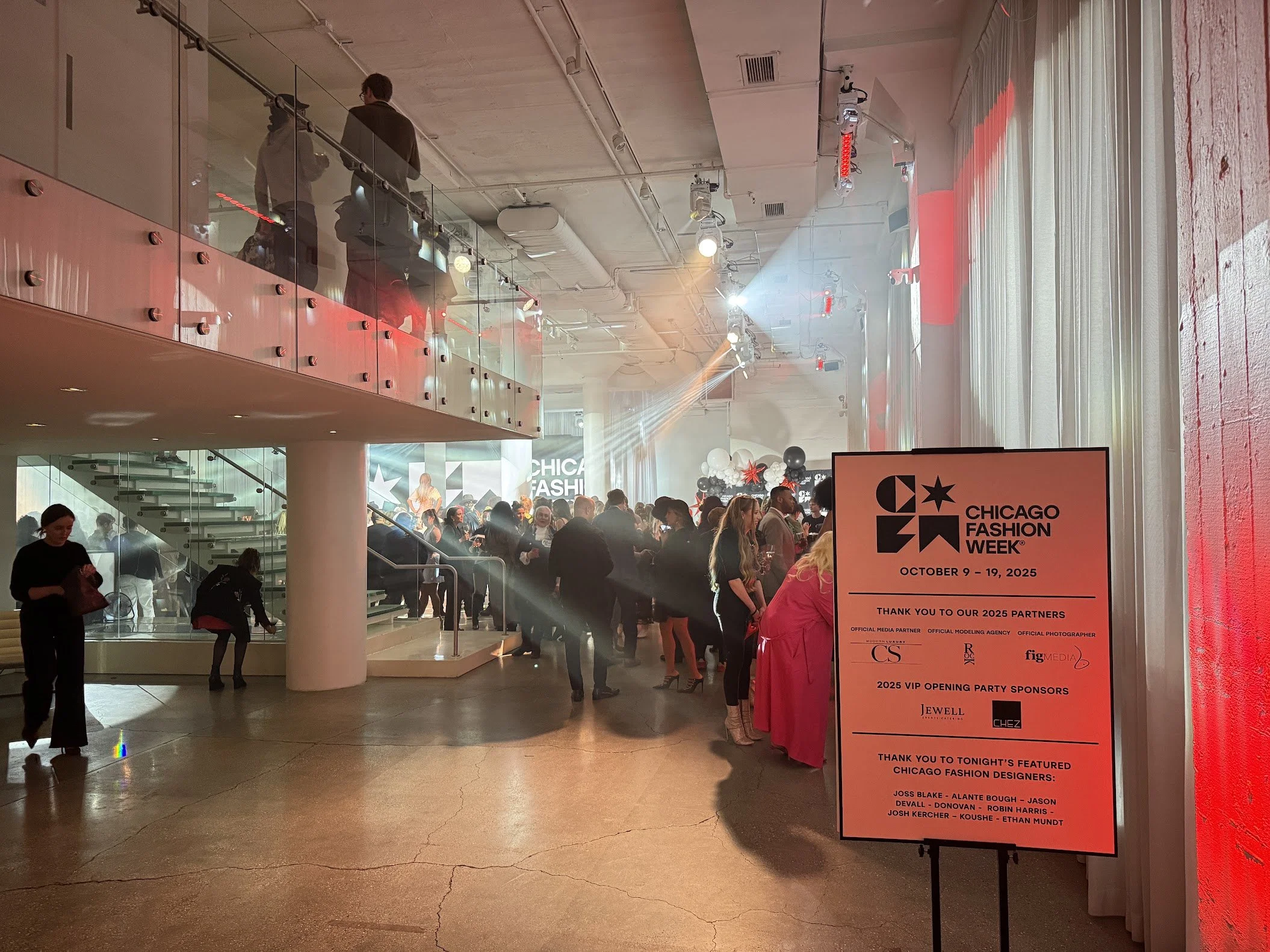
Image from the 2025 Chicago Fashion Week exclusive opening celebration.
Chicago fashion has never stopped at the Illinois state line.
Designers based here participate in fashion events throughout the Midwest, while others have studied, produced, worked or presented their collections nationally and internationally. At the same time, Chicago brings people and ideas from other cities into its own fashion community.
Those relationships are part of the larger story surrounding Chicago Fashion Week today.
That can be seen across the Midwest. Milwaukee Fashion Week featured Chicago-connected designers Mark Roscoe, Nadia Ivanova and Taneasha Prunty. [Milwaukee Magazine]
Kansas City Fashion Week included Chicago designer Peach Carr in its 2025 designer lineup. [Kansas City Fashion Week]
Kansas City Fashion Week has also drawn designers from around the country. [Axios]
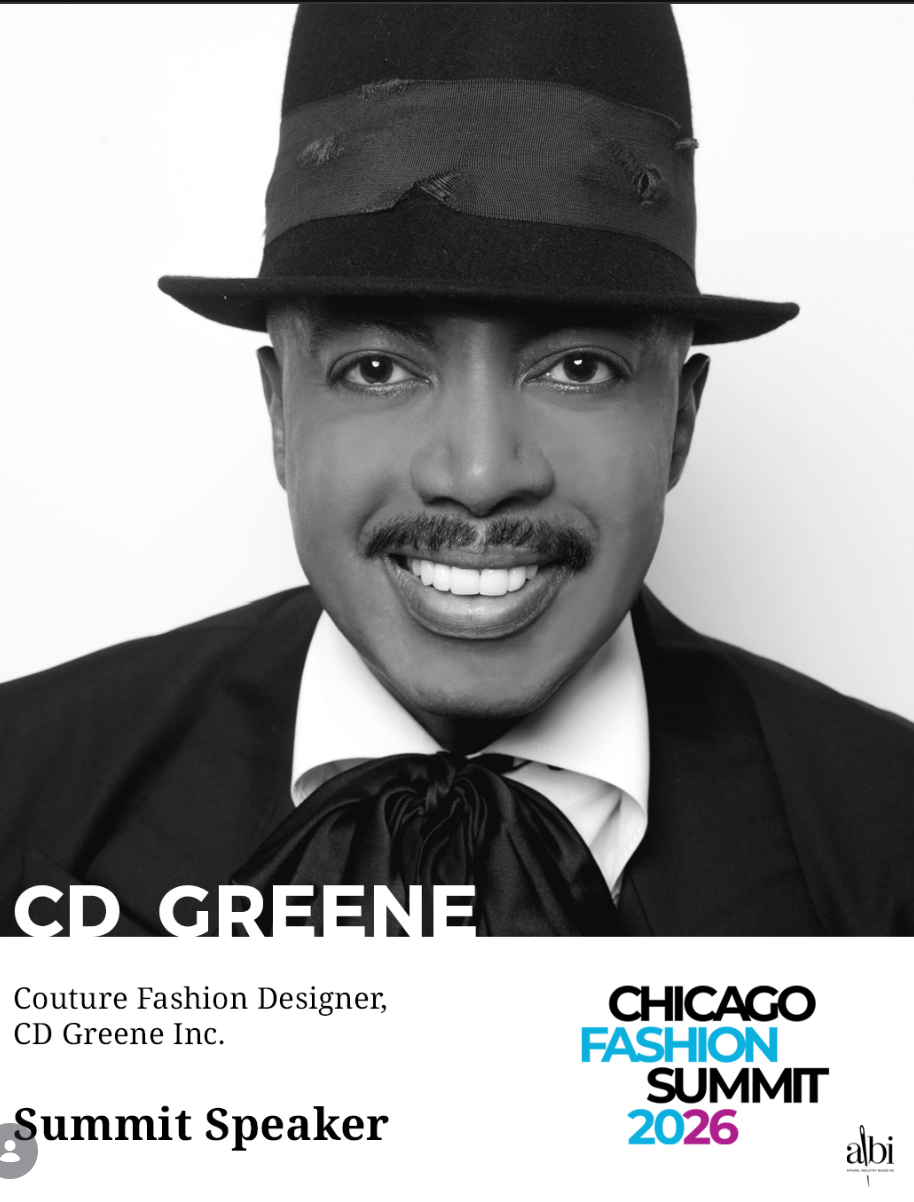
Image from Chicago Fashion Summit 2026 Instagram
These events may take place in different cities, but their fashion communities are not isolated from one another. Designers travel between markets, introduce their work to new audiences and develop relationships outside their home cities.
That regional perspective can also be found within Chicago Fashion Week itself. The 2026 Chicago Fashion Summit describes its purpose as elevating the fashion ecosystem in the Midwest, bringing together designers, creatives, retailers and innovators to exchange ideas and build networks. [Chicago Fashion Week – Chicago Fashion Summit]
Featured summit speaker, C.D. Greene grew up in Chicago’s West Chesterfield neighborhood, studied fashion in Chicago and worked for Chicago retailers before moving to New York and building a couture career. [LinkedIn] [Rocky Mountain PBS]
The Chicago Streetwear Expo, also part of the 2026 Chicago Fashion Week schedule, will feature more than 25 Chicago brands alongside brands from Atlanta, New York, Los Angeles, Indiana and other markets. [Chicago Fashion Week – Chicago Streetwear Expo]
Chicago designers are also working far beyond the Midwest.
FGI Chicago’s 2026 Rising Star Award finalists offer several examples of Chicago fashion careers extending nationally and internationally.
Raj Patel is based in Chicago and serves as Creative Director of Karmic Couture, but his designs have been presented in Chicago, New York, Mumbai and at Lakmé Fashion Week.
Holly Garrard’s Fundae showed at Paris Fashion Week in 2025, and the brand’s press materials also list appearances at Milan Fashion Week and New York Fashion Week. [Fundae] [LinkedIn]
Vanessa Arroyo was born in Chicago and began her fashion career here before later working in New York and traveling to León, Guanajuato, Mexico, where she learned from footwear artisans.
Yohance Lacour produces YJL sneakers in Portugal, while Brian S. Leon established KOUSH in Uruguay before the brand began operating and presenting in Chicago.
These designers are working in Chicago today, but their careers connect the city to fashion communities and industries well beyond Illinois.
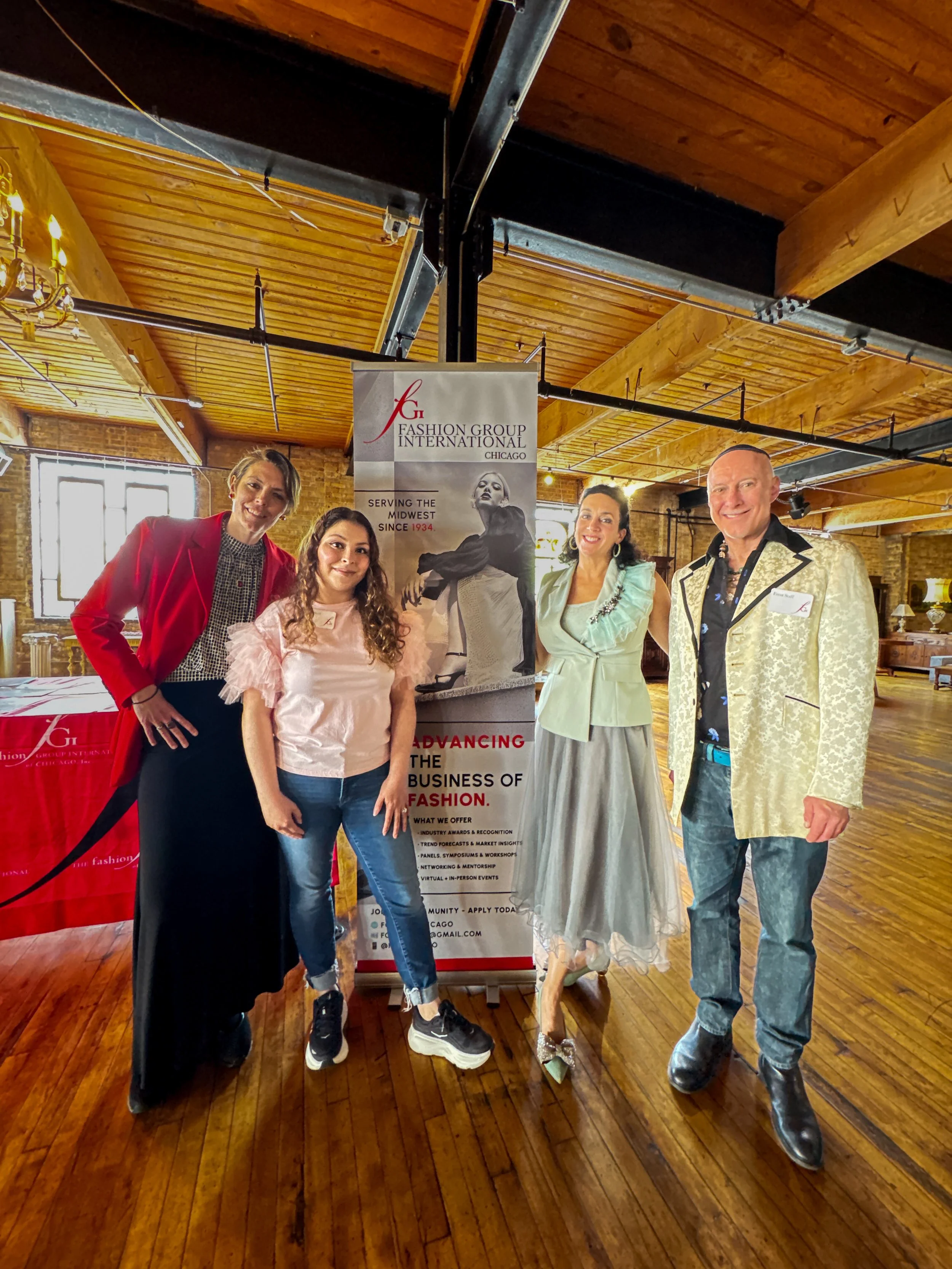
FGI provides another example of connections. FGI Chicago has been part of Chicago’s fashion community since 1934 while also belonging to the international Fashion Group International organization. [FGI Chicago]
The 11th FGI Chicago Rising Star Awards will take place October 10 during the 2026 Chicago Fashion Week period.
FGI Chicago Recognition in New York
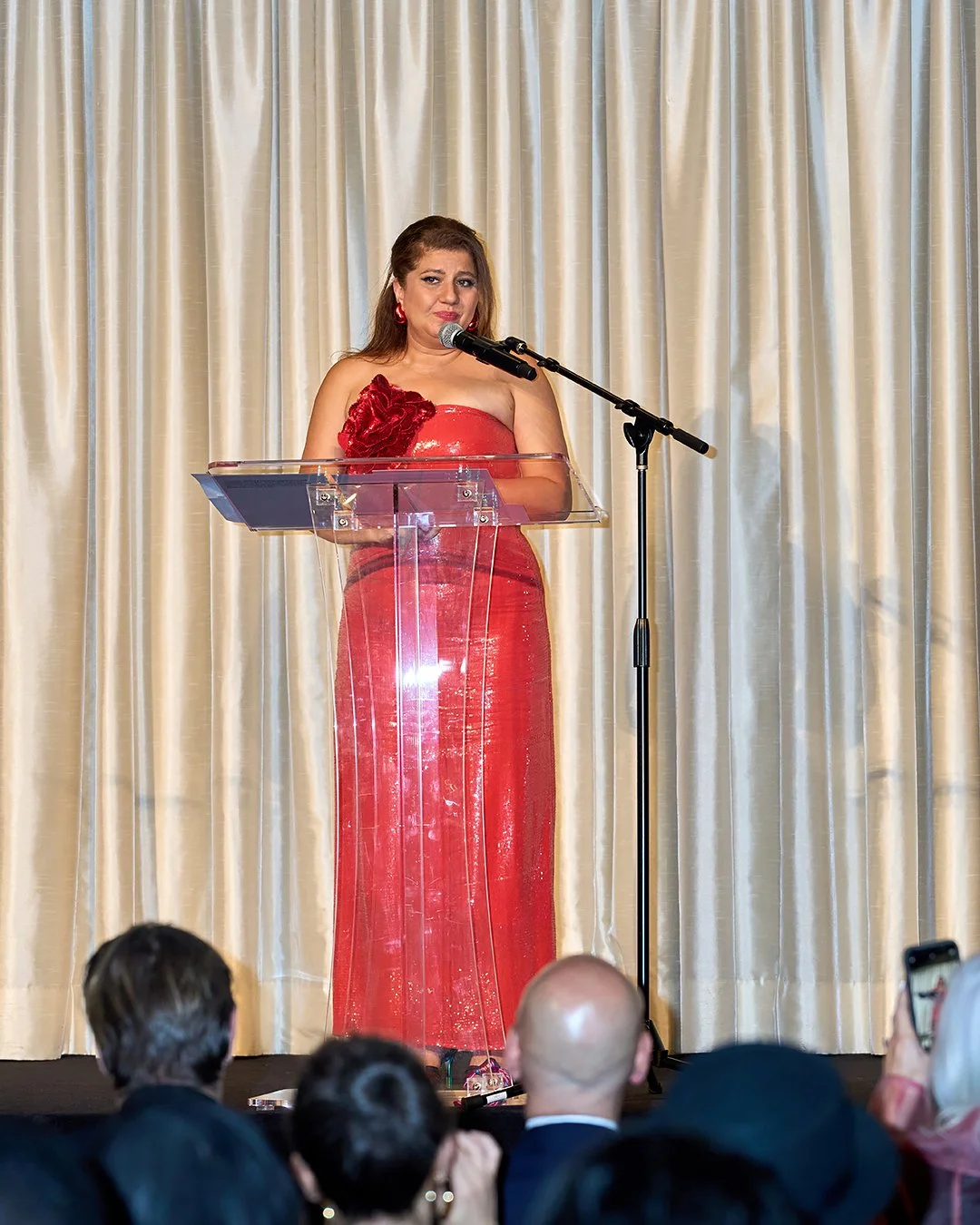
Dana Asady receiving the 2024 FGI Chicago Rising Star Award. Photo by Sasha
Some FGI Chicago Rising Star recipients and finalists have also received recognition through FGI in New York. Holly Garrard’s Chicago-based Fundae was a finalist for an FGI New York Rising Star Award in Sustainability. [LinkedIn]
Dana Asady, who won the FGI Chicago Apparel Rising Star Award in 2024, later became a finalist for the FGI New York Rising Star Awards. [FGI Chicago LinkedIn]
Chicago-based NICZKA was also a finalist for the New York Rising Star Awards in 2024. [NICZKA]
Chicago Fashion Week describes itself as a celebration of Chicago’s fashion ecosystem, but that ecosystem does not end at the city or state border. [Chicago Fashion Week] It includes designers moving between Midwest cities, Chicago professionals showing internationally, people bringing experience from other markets into Chicago and organizations creating connections between local and larger fashion communities.
For Illinois Fashion History, those relationships are part of the history too. Documenting fashion in Illinois means documenting what happens here, but it also means following the people, places and networks that connect Illinois fashion to the Midwest and to the wider fashion industry.
Chicago Fashion Week gives us a chance to celebrate what is happening here now. Understanding those wider connections helps tell the fuller story of how Chicago fashion got here — and where it continues to go.
From the Garment District to State Street: Mood Fabrics Opens in Chicago
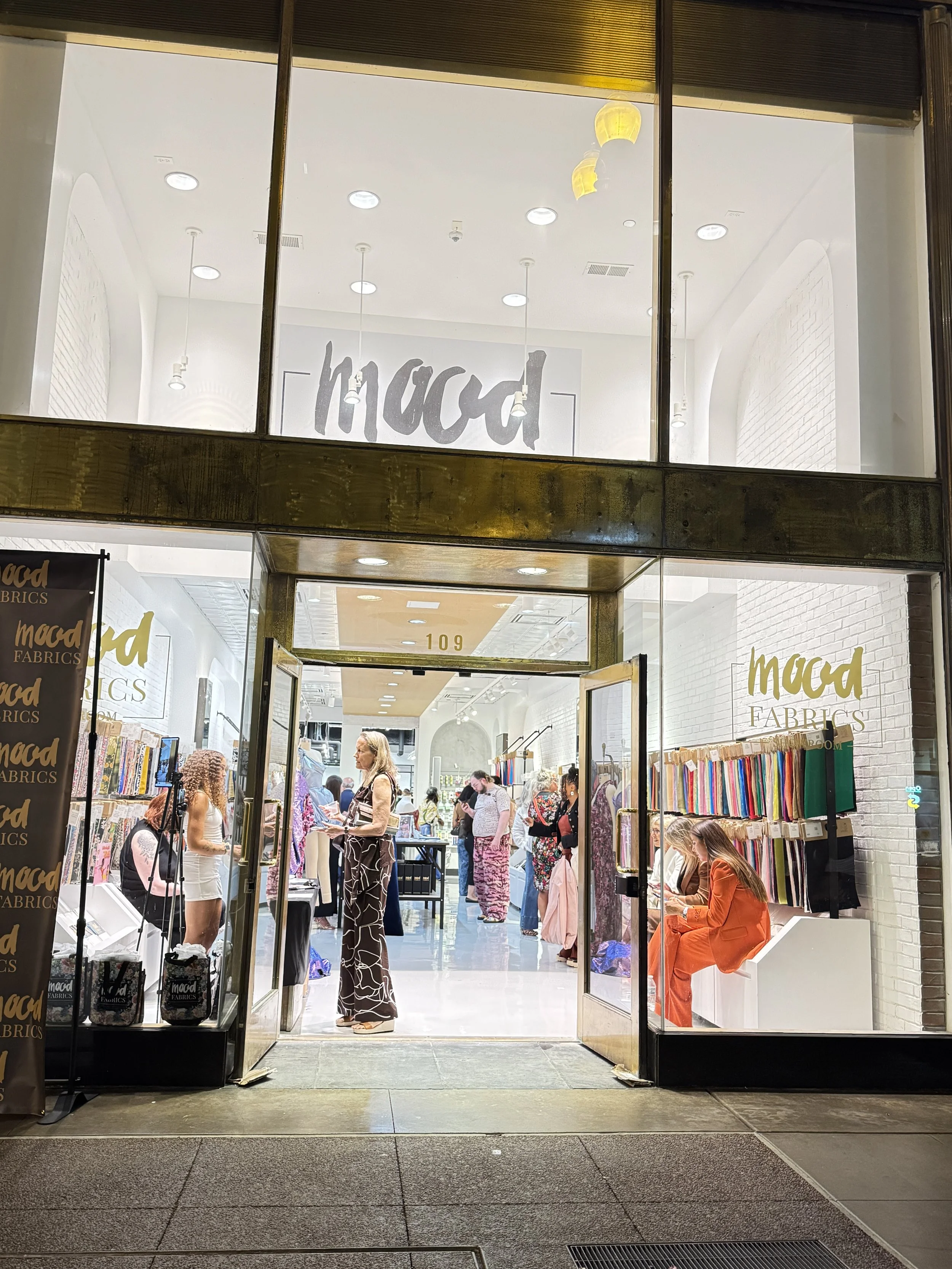
Chicagoland’s fashion industry has been buzzing since mid-July 2026 with the news that Mood Fabrics, the celebrated New York fabric destination associated with Manhattan’s Garment District, was coming to Chicago. On August 24, the company held a soft opening at its new Loop showroom, followed by an opening celebration on September 10. VIP guests were invited from 5 to 7 p.m., with ticketed public guests entering at 7 p.m.
Mood Fabrics is a well-known staple of the fashion industry because of its long history in New York City as well as its appearances on the reality competition series Project Runway. If you have been to Mood in New York, you know it is full of rolls of fabric, trims, notions, and tools—a treasure trove for designers, students, and sewists.
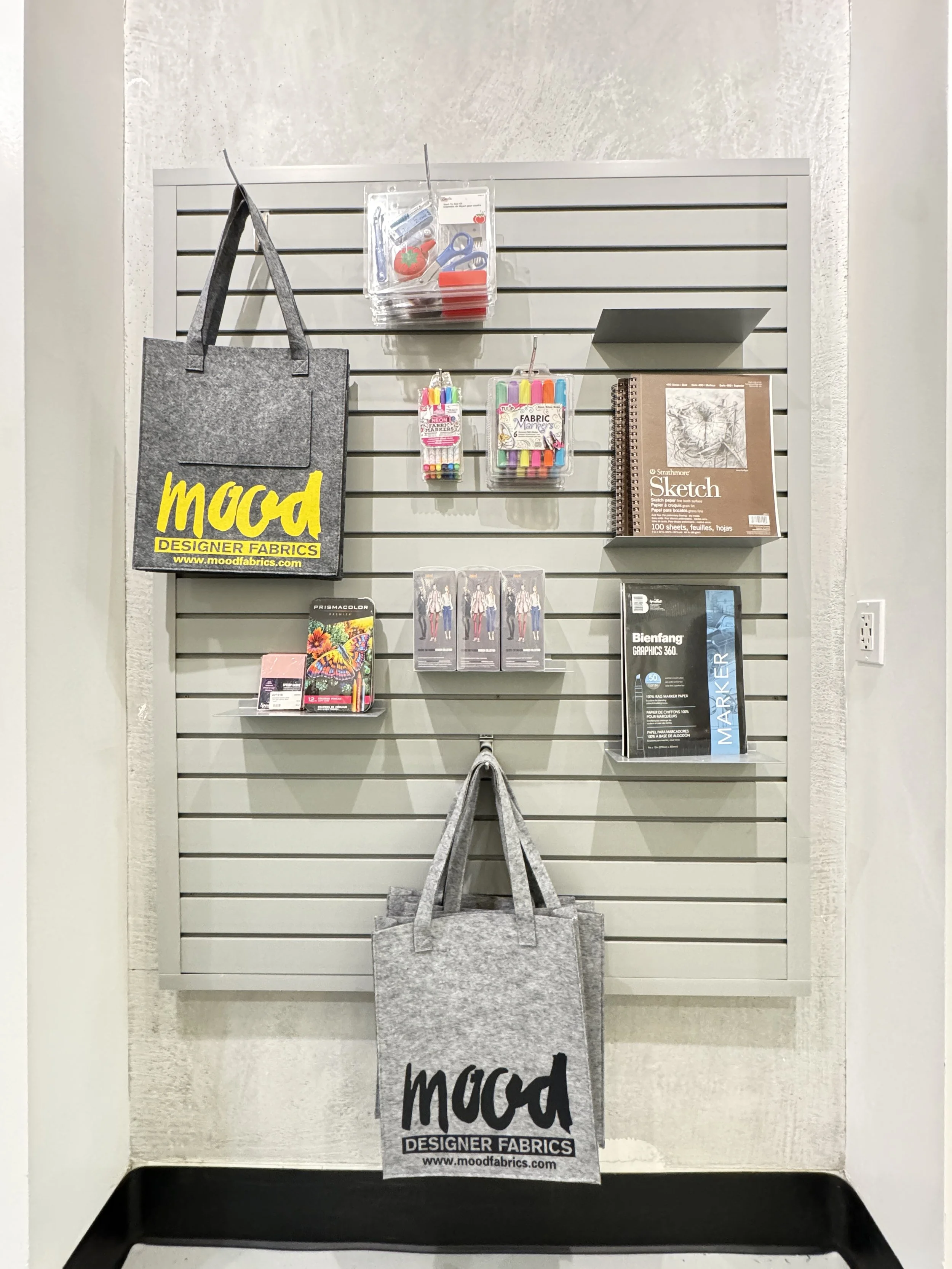
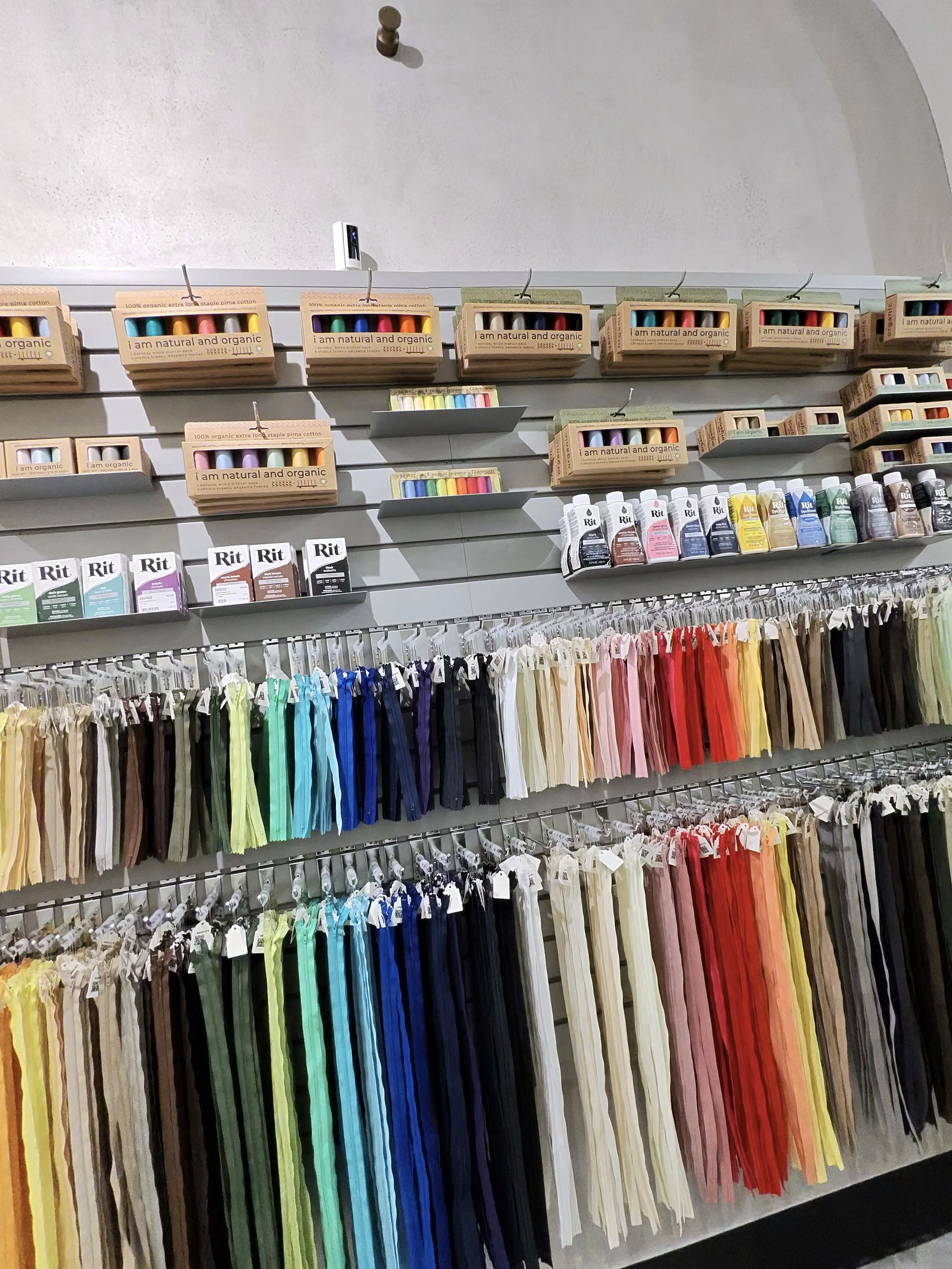
What makes the Chicago location different is that it is a showroom. Rather than shelves and racks of fabric bolts ready to take home, the showroom features fabric headers with material details and swatches large enough to understand the color, texture, weight, and hand of each material. Visitors can explore the fabric options in person, browse notions, trims, and tools, and then order fabric through Mood.
Mood first introduced its showroom concept in Atlanta at Ponce City Market in April 2026. Chicago is its second showroom-format location and its first in the Midwest. The Atlanta showroom combines fabric samples and sewing supplies with paid classes, workshops, and community events—an encouraging model for what the Chicago location may become. [moodfabrics] [poncecitymarket] [msn]
The approximately 2,000-square-foot Chicago showroom is located at 109 S. State St. in downtown Chicago’s Loop, within the historic Palmer House’s State Street retail frontage. The storefront was previously home to an Aerosoles shoe store. Mood’s arrival is a notable fashion-oriented addition to State Street, an area with a long history as one of Chicago’s major shopping corridors. The Chicago showroom features more than 10,000 fabric swatches along with thousands of notions and accessories. [blockclubchicago]
An Opening Celebration
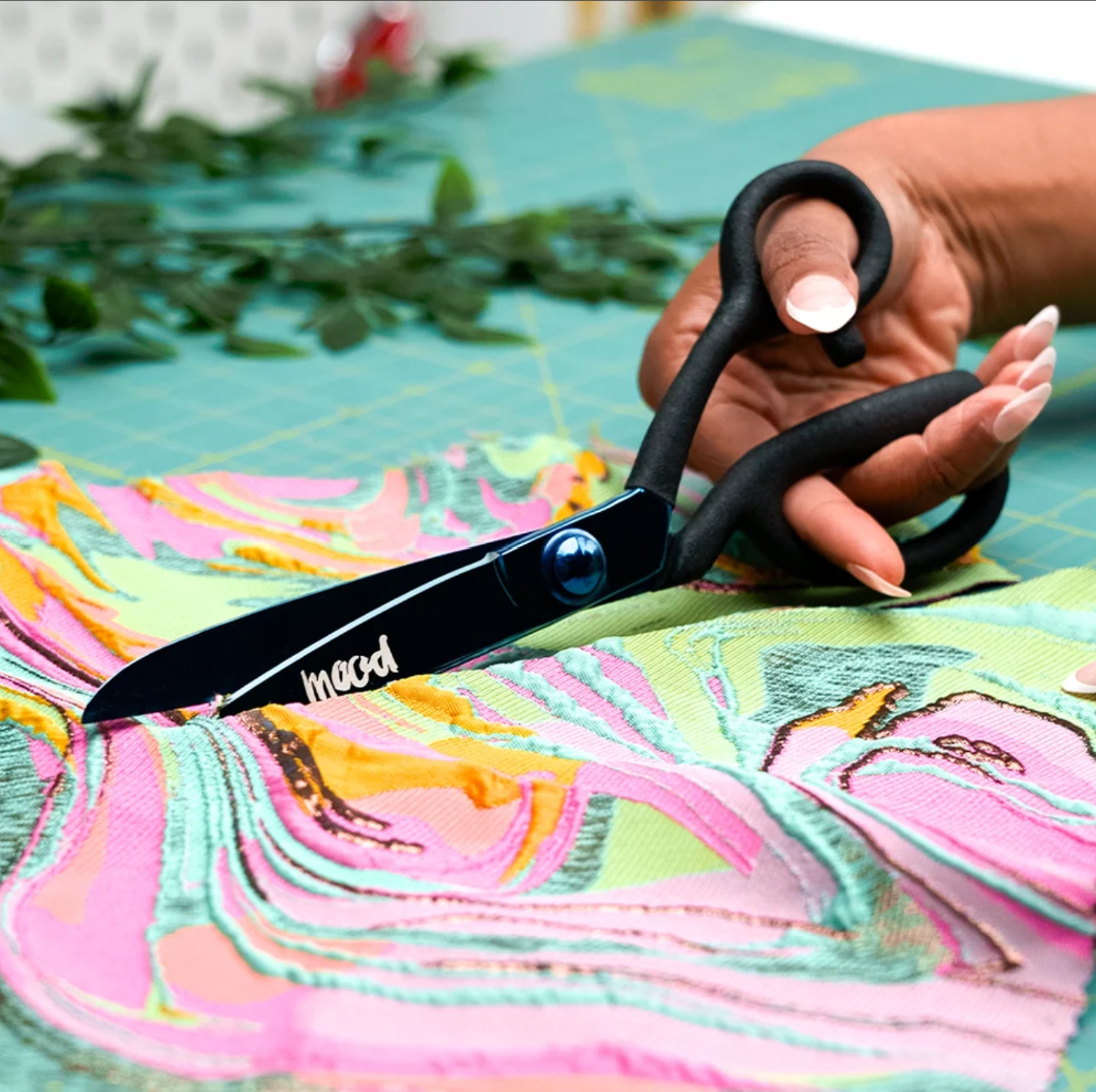
The opening party at Mood was lively, with a step-and-repeat, literature and displays about local talent and upcoming classes, and a wonderful spread of refreshments. Mood provided VIP guests with a bright branded bag that included a tape measure, pen, stickers, a patch, and the standout item: a pair of Japanese steel scissors. For an audience filled with sewists and makers, it was a particularly thoughtful welcome gift.
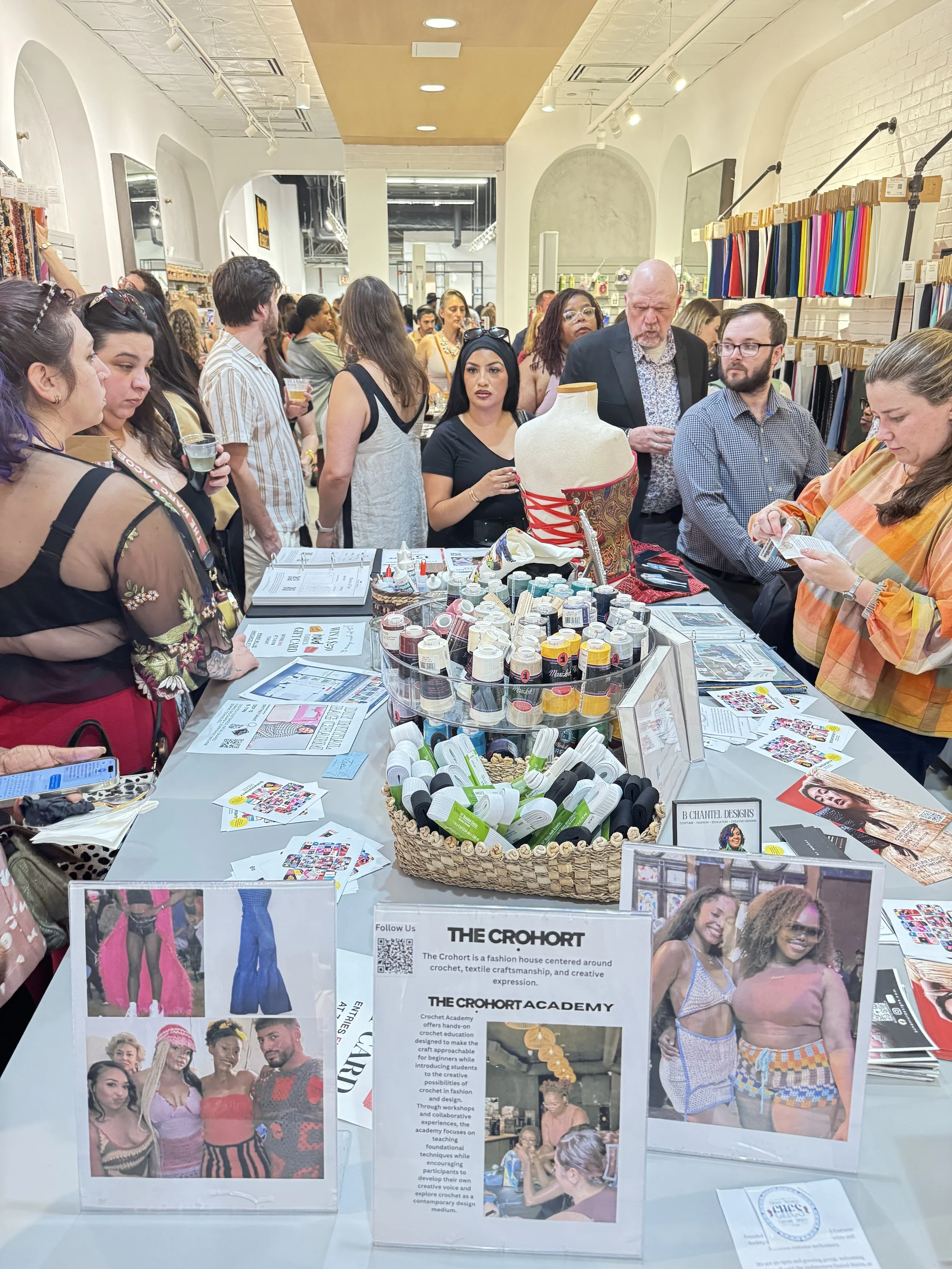
Literature about designers & upcoming classes
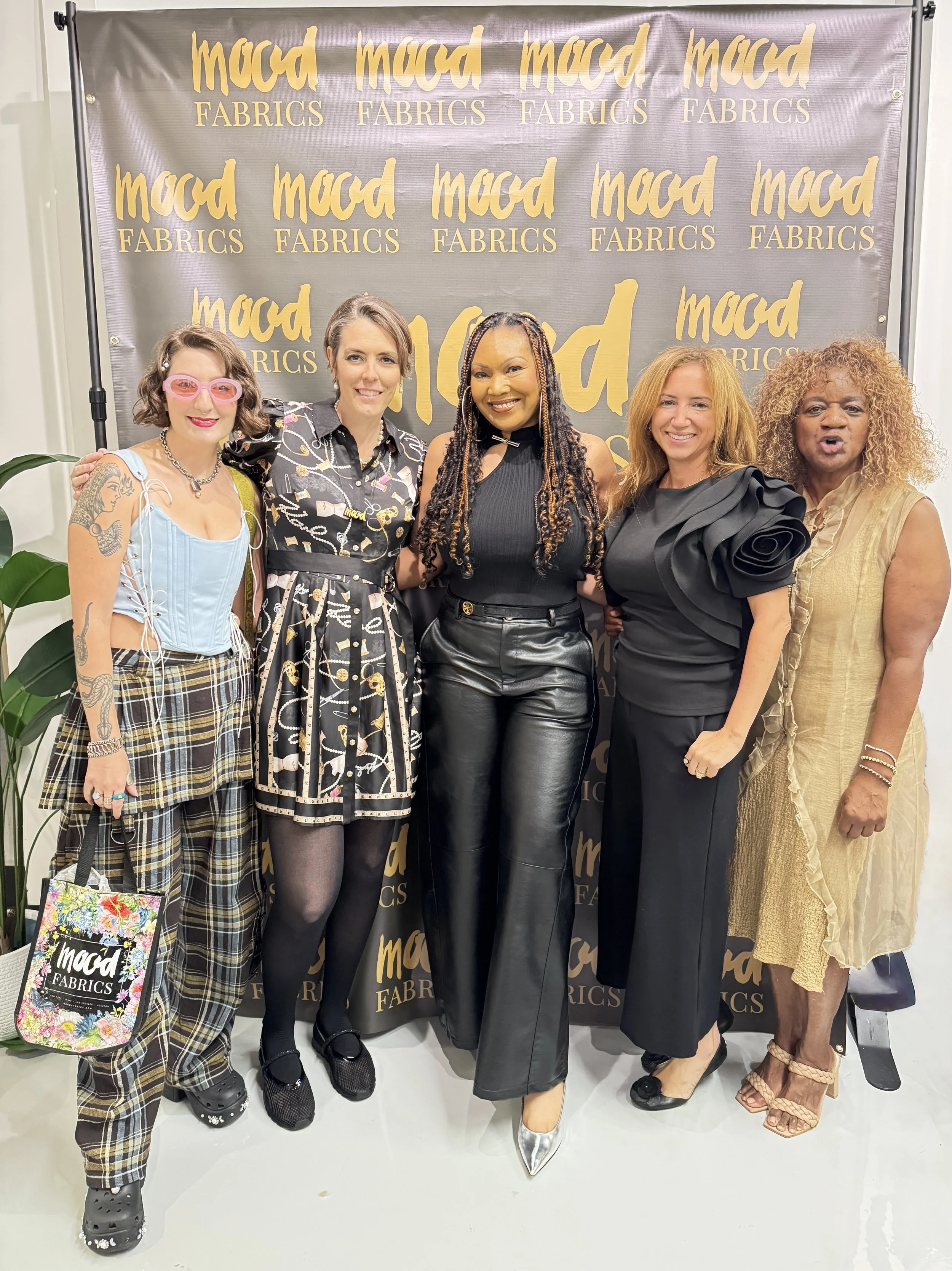
Rahela Tanase, Jess Crane, Aisha Jackson, Melissa Carr & Nancy Plummer
What I found most interesting about the crowd was its variety. There were professional industry people I see at many local events, but also home sewists, artists, costumers, cosplayers, and other creative makers. It was refreshing to meet more of Chicago’s fashion community—people who are actively making, imagining, and creating.
That mixture of attendees may be one of the most exciting aspects of Mood’s Chicago arrival. The showroom has the potential to become not only a place to shop or order fabric, but also a gathering point for the many overlapping creative communities that make up Chicago’s fashion ecosystem.
A Surprise Fashion Show
At one point during the evening, a Mood team member began moving the step-and-repeat backdrop. Guests immediately wondered where it was going and why. To our surprise, it made room for an informal fashion show.
The DJ enthusiastically introduced each designer and their looks, all created with Mood Fabrics. The show included designs by:
Saraid, @sunsetsaraid
Ren Willis, @rensowavy
Jen Mason, @jenrestylefashion
Lauren, @misseandc.cosplay
Chardeney Mason, @chardeney_mason
Marissa Croft, @sinistra.marissa
Mia Purcell, @miathemaker
Peach Carr, @peach_carr
Nic White, @nic__white
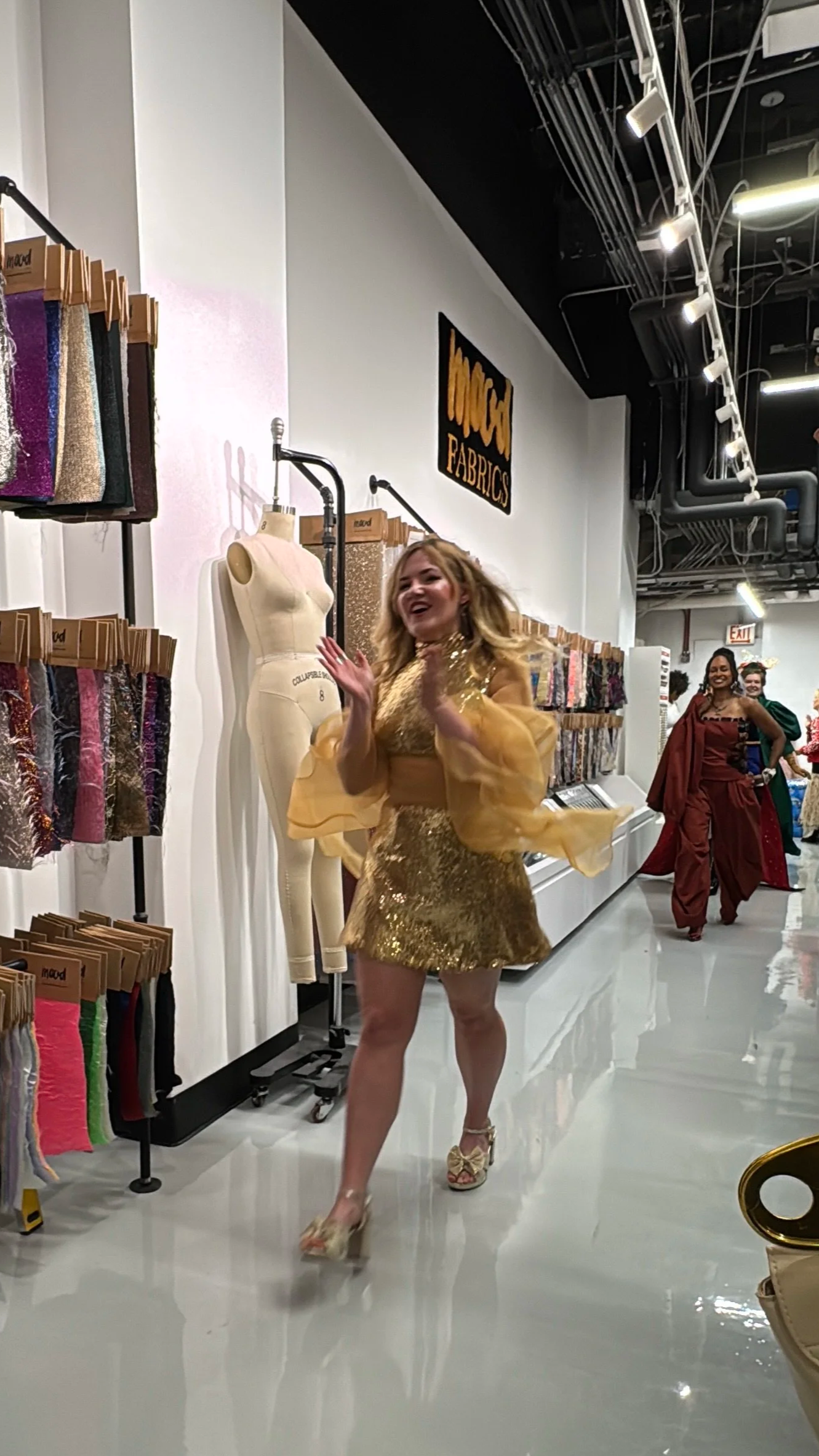
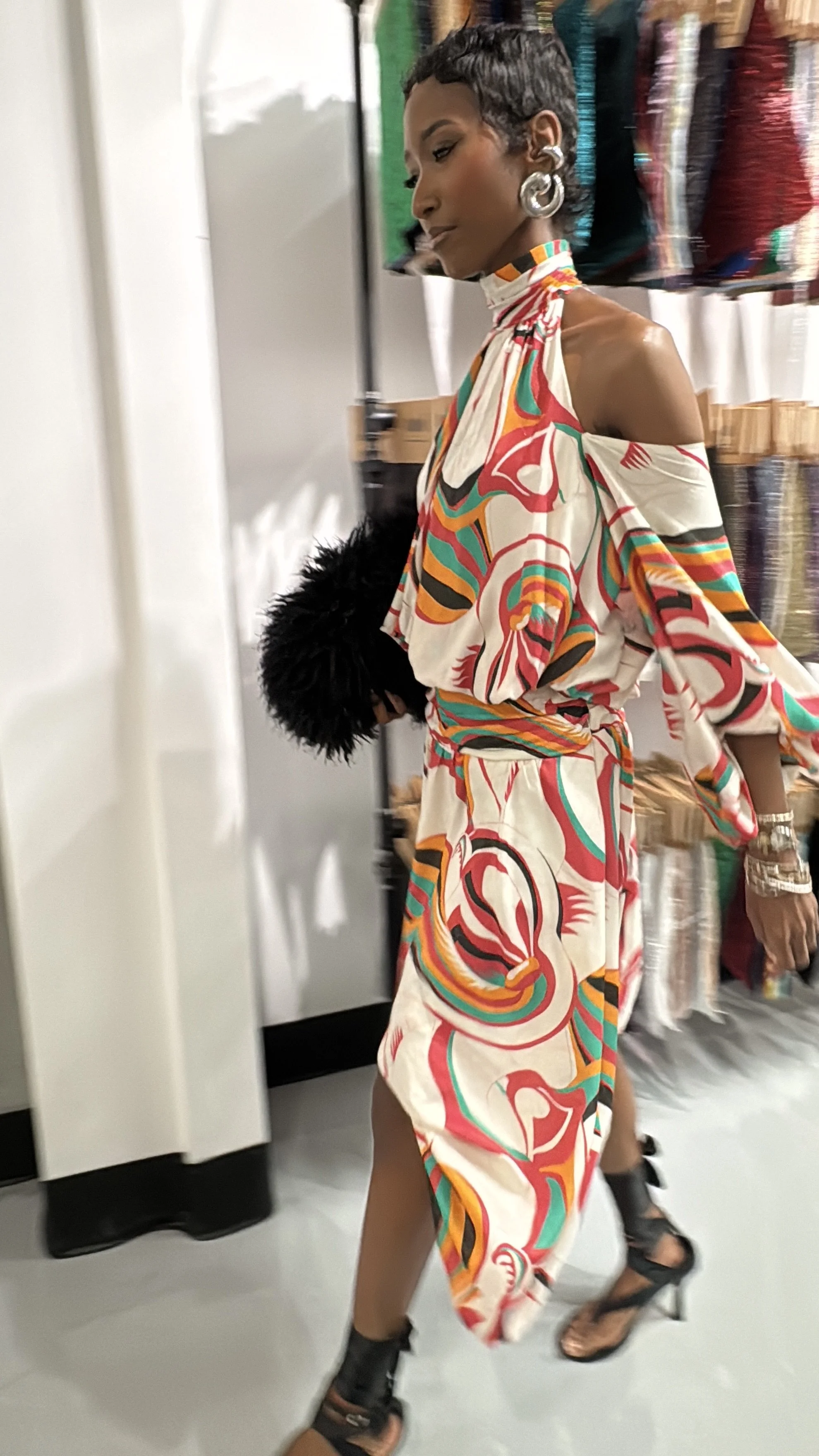
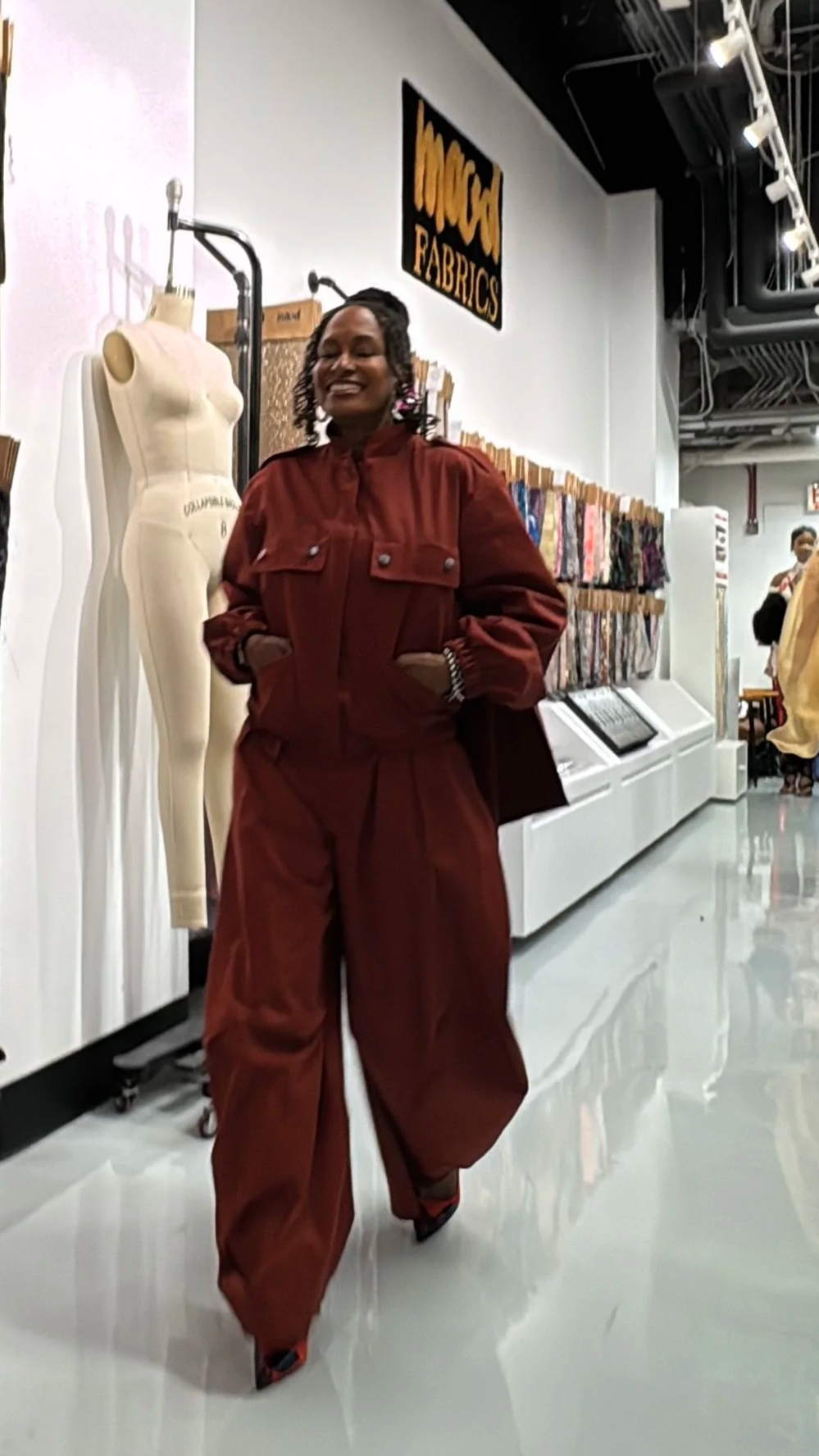
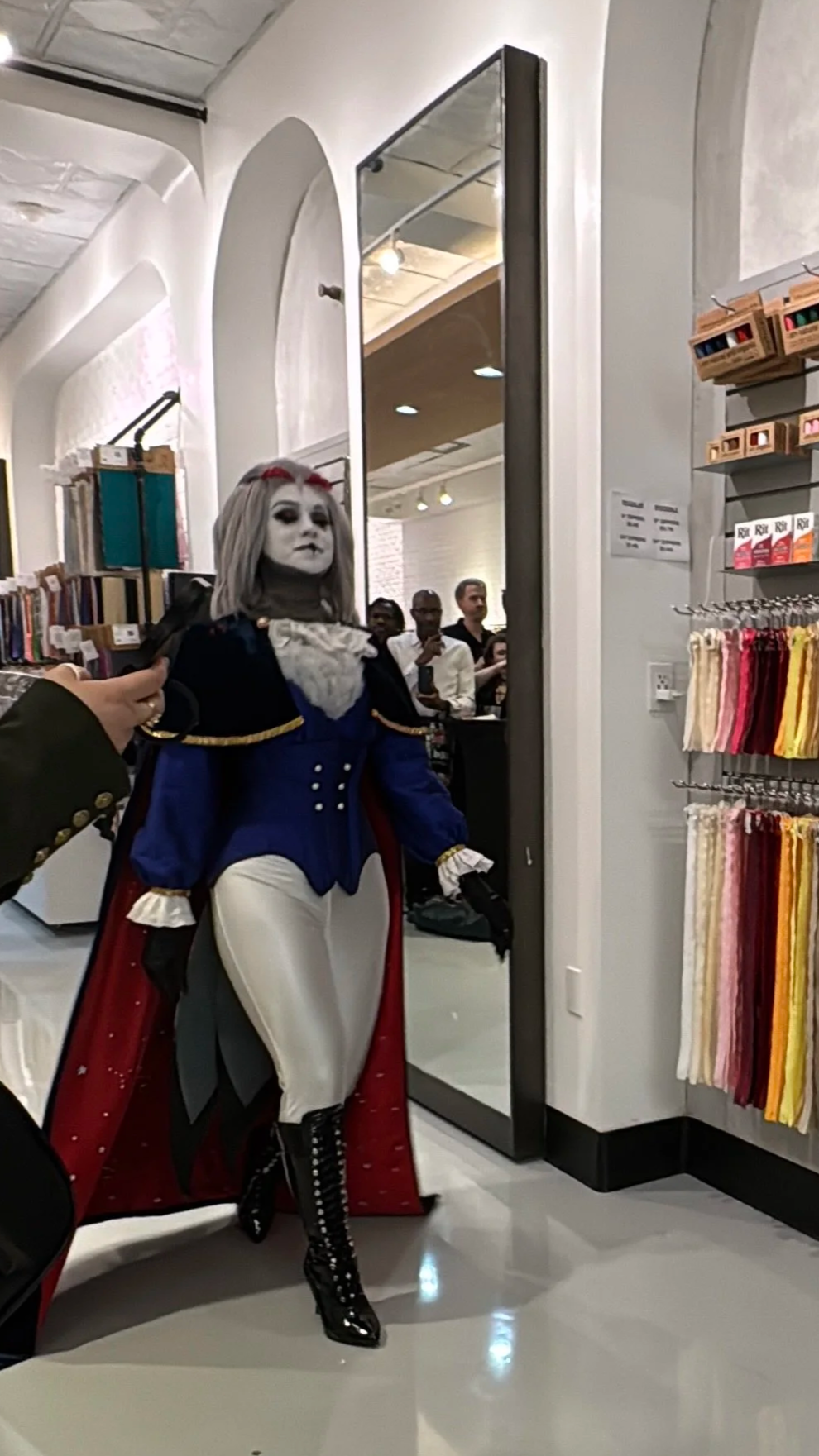
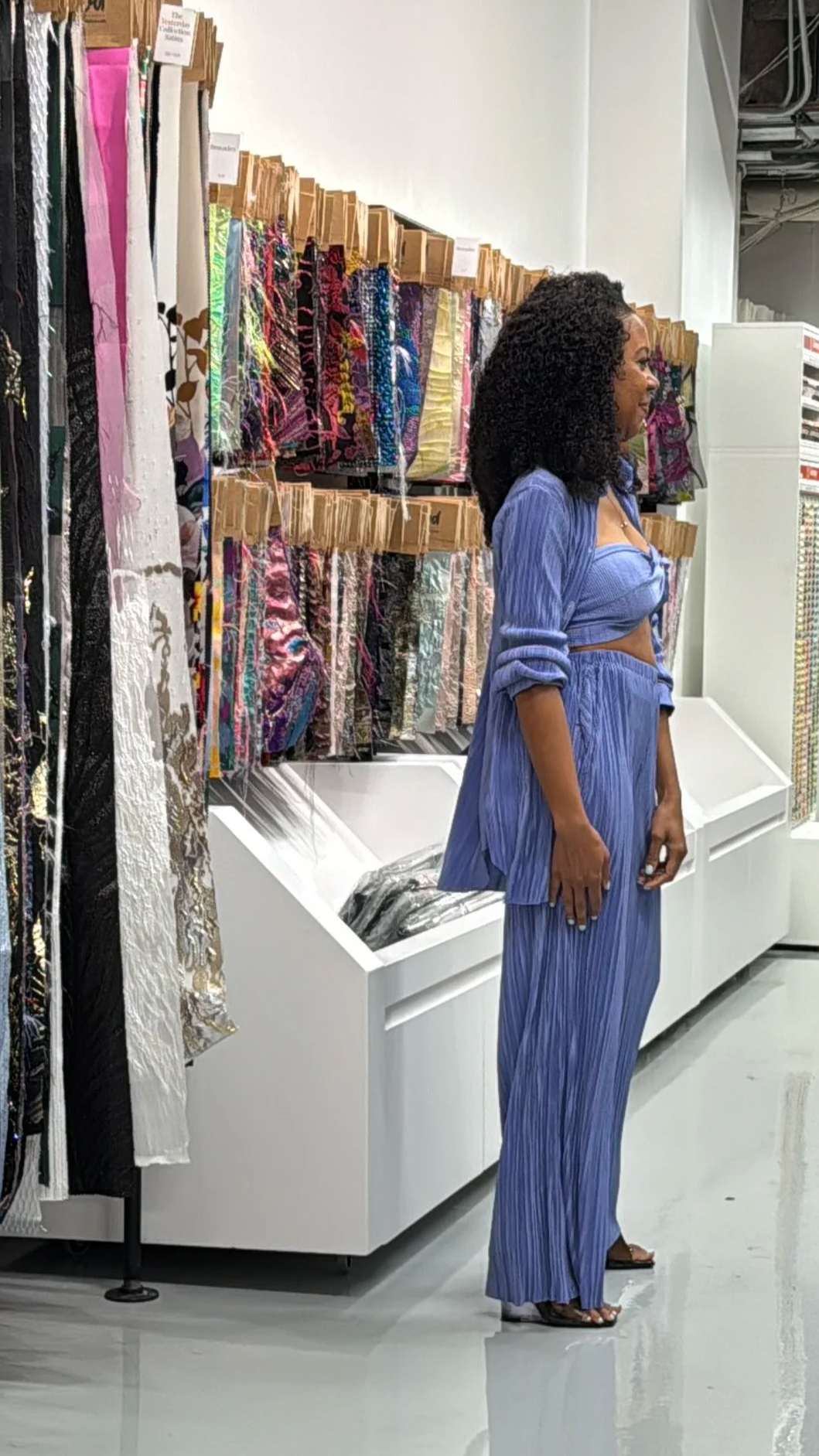
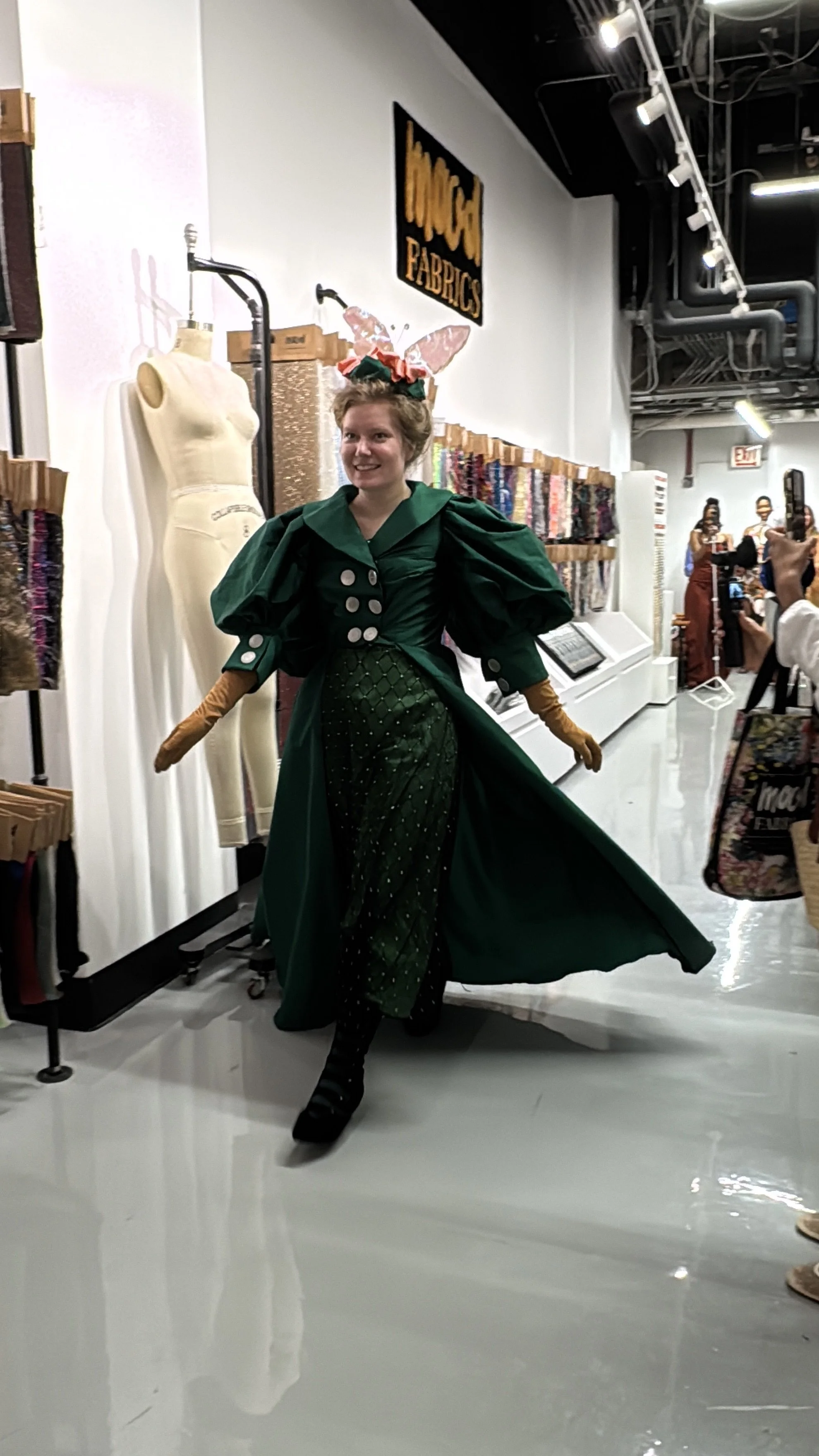
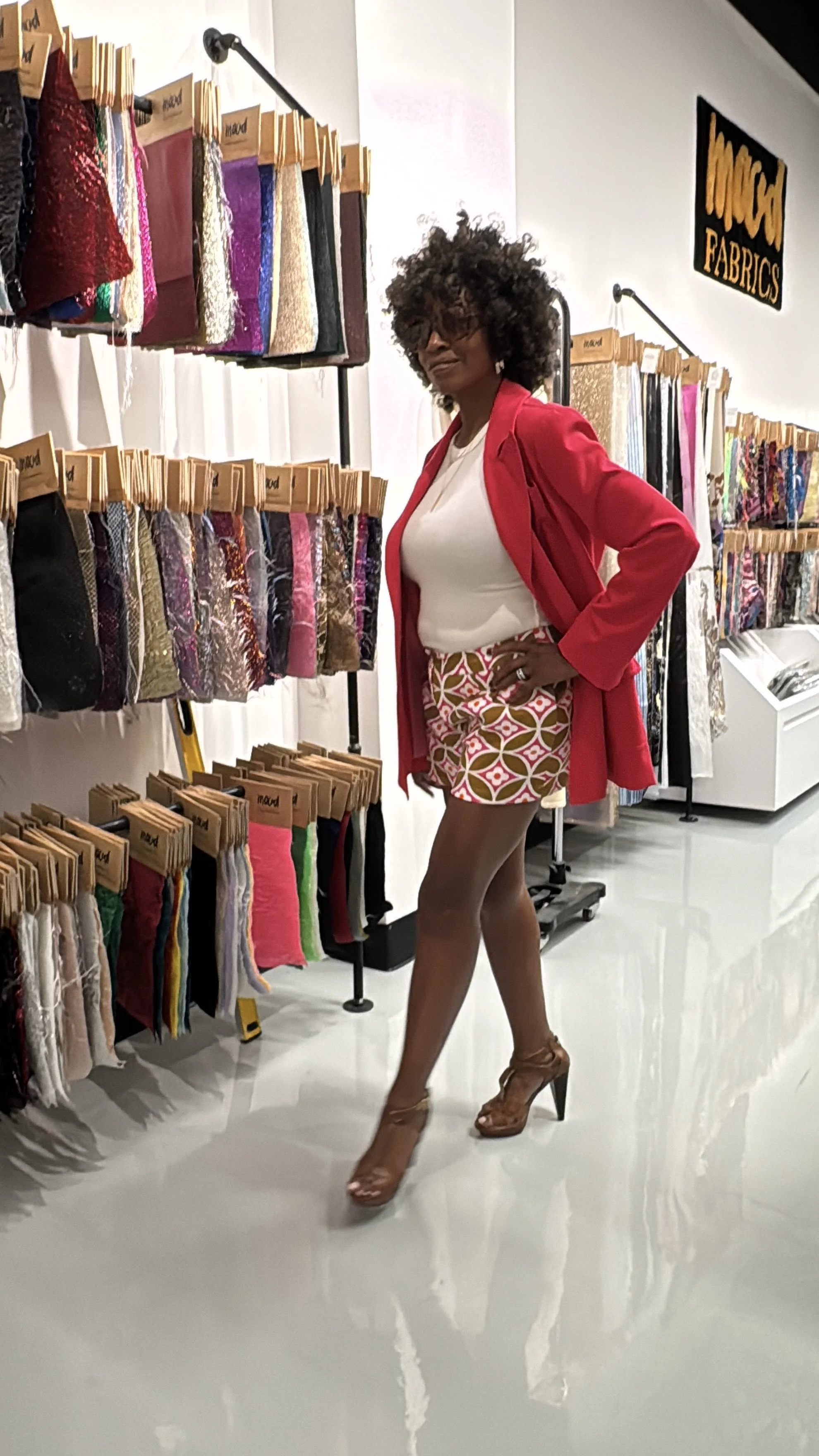
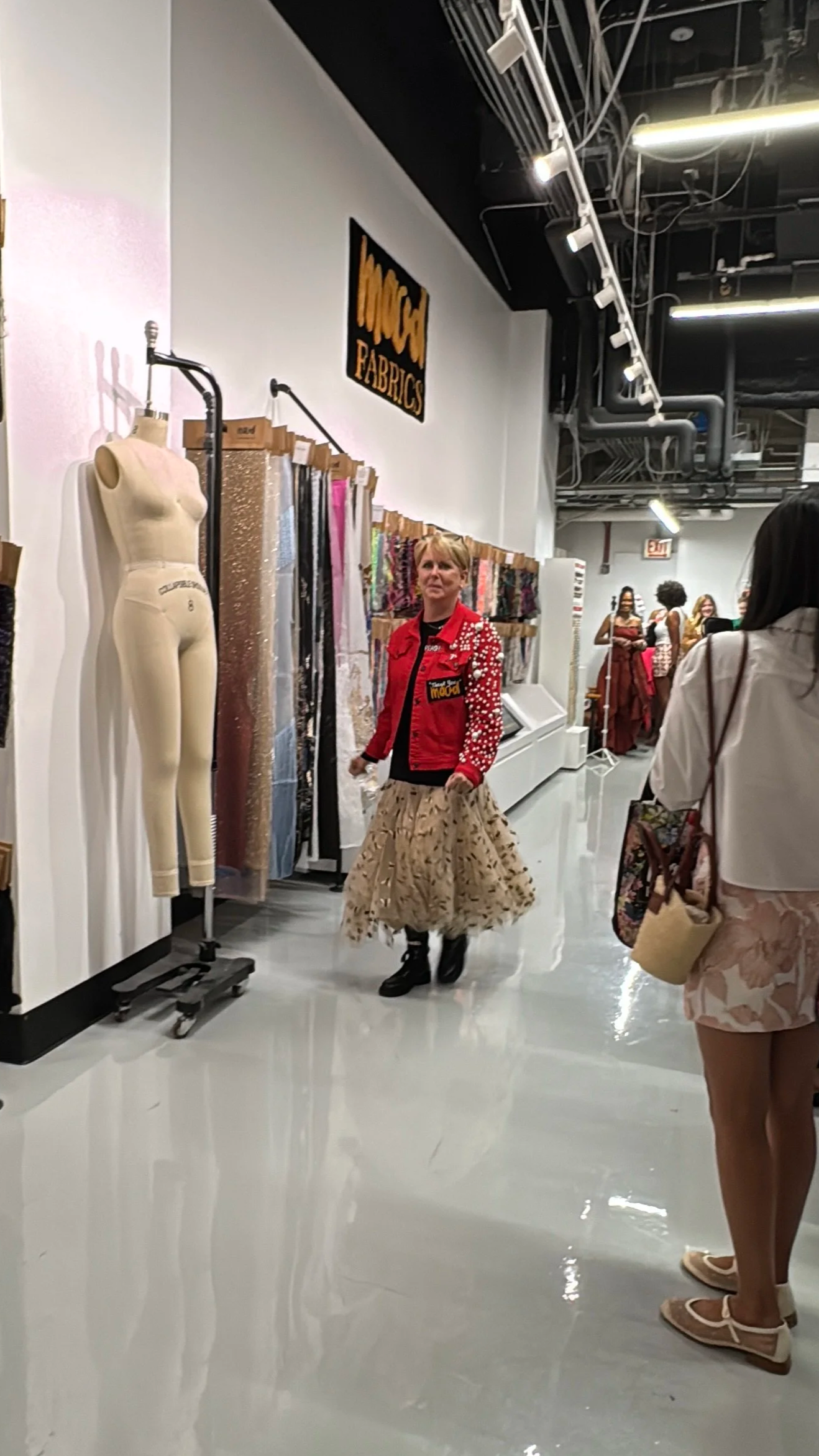
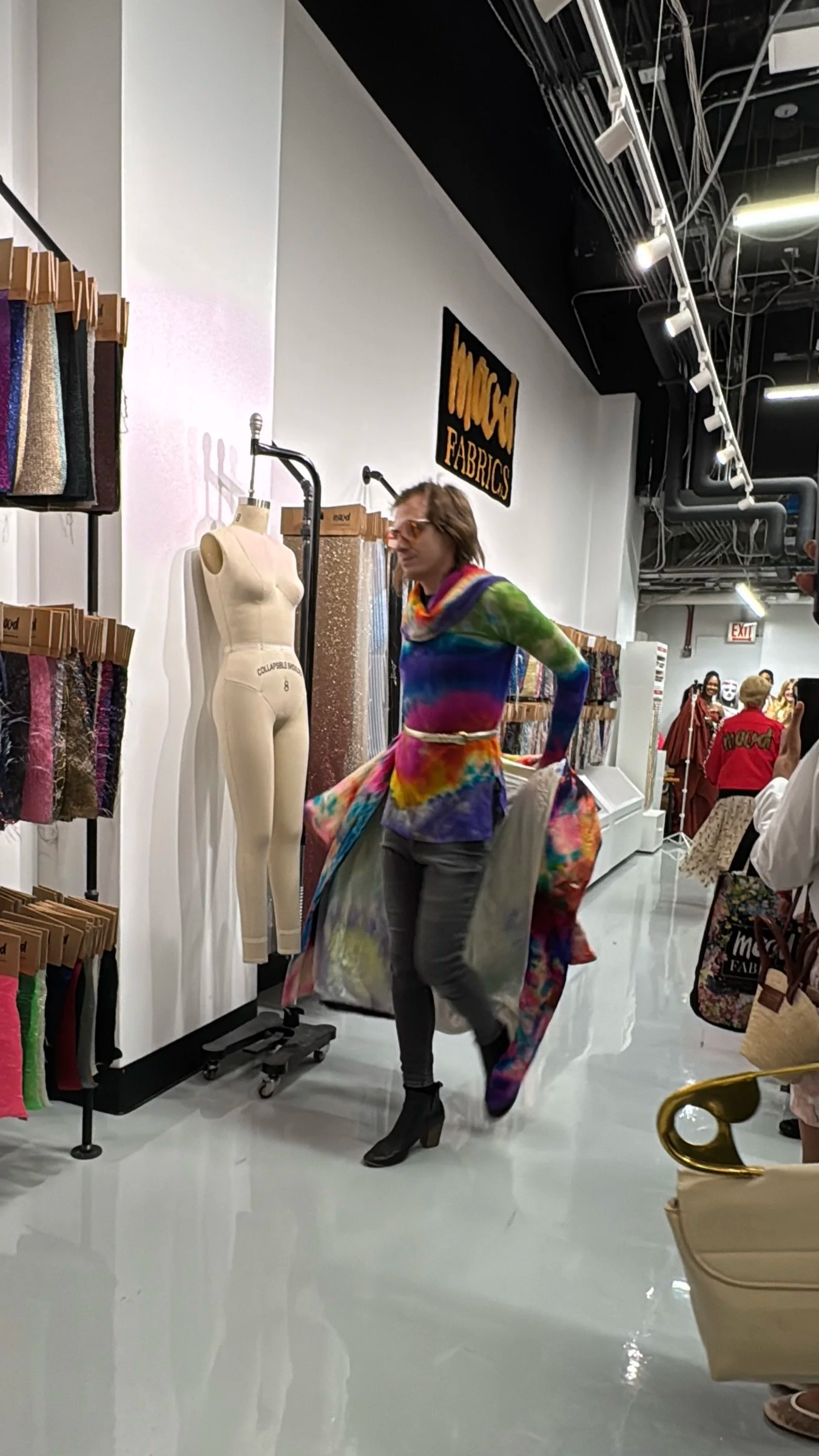
It was a wonderful evening celebrating the opening of the Mood Fabrics Showroom and, just as importantly, Chicago’s fashion professionals, independent designers, home sewists, and creative makers.
With upcoming classes, local talent displays, and a showroom designed to bring people into conversation with materials, Mood Fabrics has the potential to become a meaningful new resource for Chicago’s fashion community.
Visit Mood Fabrics Chicago
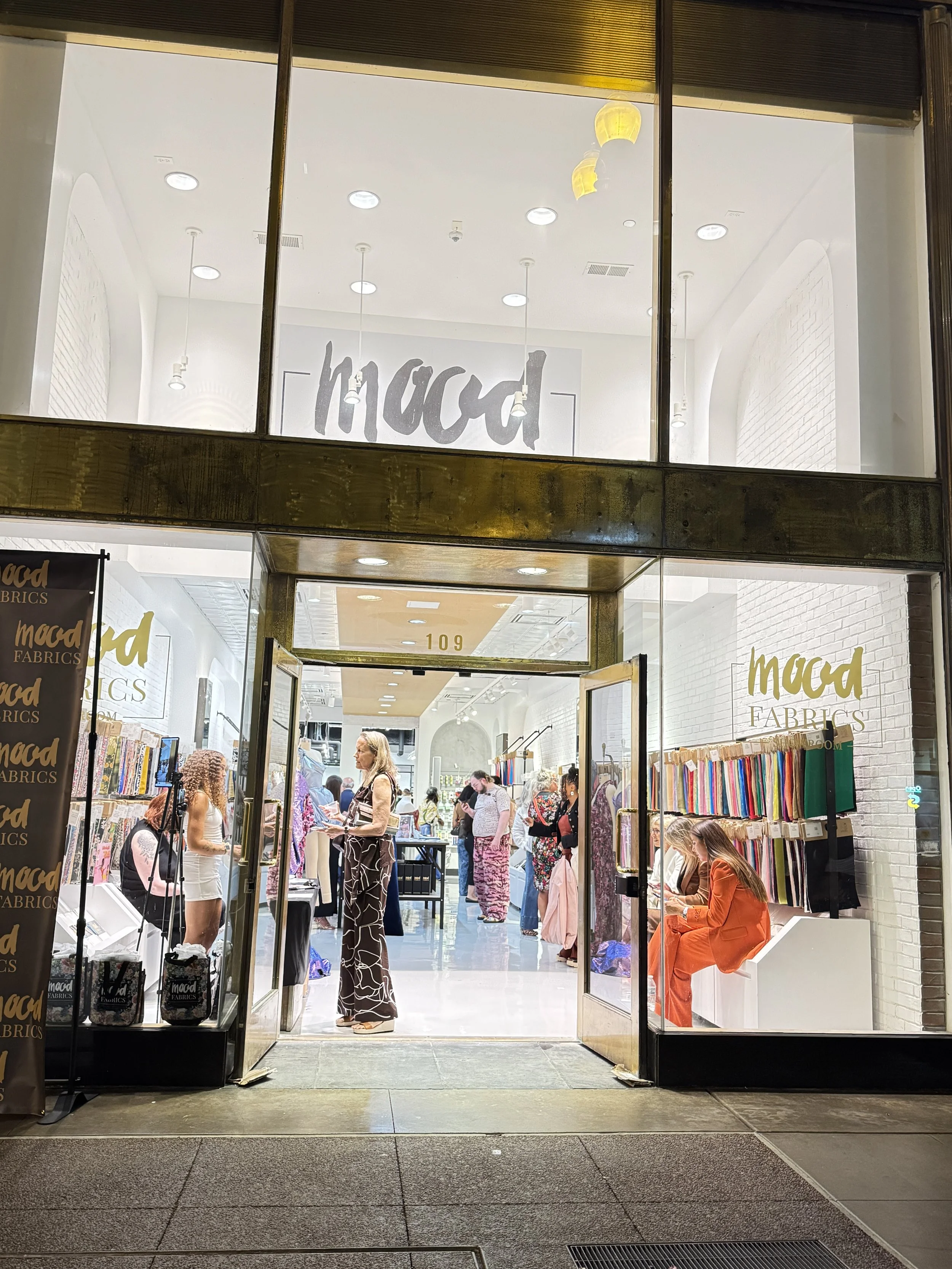
Mood Designer Fabrics Chicago Showroom
109 S. State St.
Chicago, IL 60603
Before visiting, check Mood Fabrics’ Chicago showroom page or social channels for current hours, classes, workshops, and special events.
Recent Attempts to Bring a Garment District to Chicago—and Why AIBI’s Work Matters Now
I remember what it felt like when a fabric and trim show came to Chicago. For a few days, suppliers, designers, product-development professionals, and people looking for answers were in the same place. You could look at fabrics in person, ask questions, exchange information, and meet people who understood what you were trying to build.
Then the event would end. The suppliers would leave, the seminars would be over, and the industry would become scattered again.
For years, Chicago has had designers, makers, manufacturers, educators, patternmakers, sample makers, fabric representatives, and creative entrepreneurs. But it has not always been easy to find those people or understand how all of the pieces fit together. For someone starting an apparel business, access to resources could depend on who you knew, how long you had been working in the industry, or whether you happened to meet the right person at the right event.
Looking back at Chicago’s recent fabric and sourcing events, I see several attempts to create what a garment district does: bring people, materials, knowledge, and opportunities together in one place.
The Chicago Textile Expo

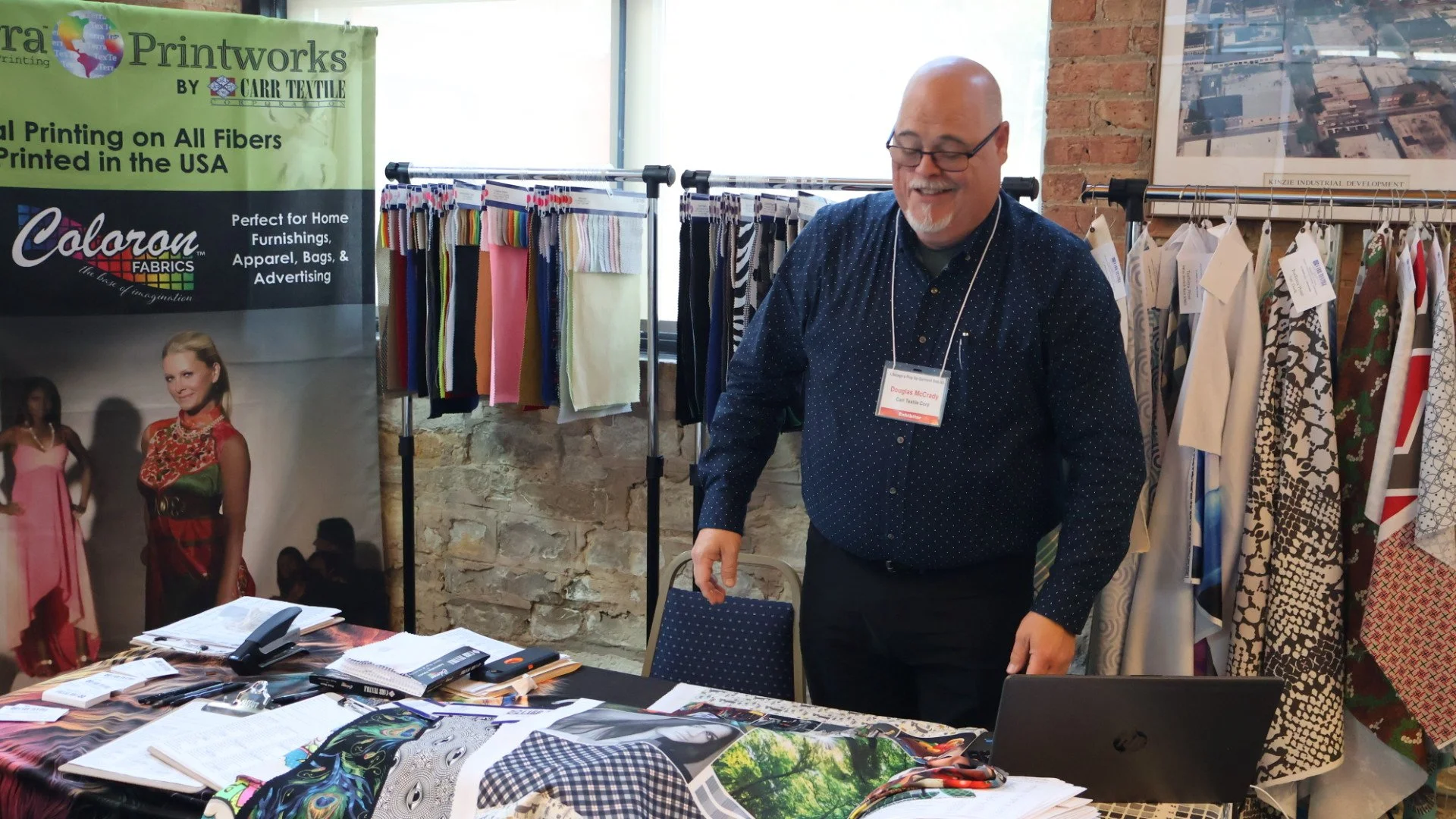
One early example was the Chicago Textile Expo, hosted by Fine Fabric Sales. The first Expo took place in October 2014 and included wholesale fabric and trim vendors, educational seminars, and an industry networking event.
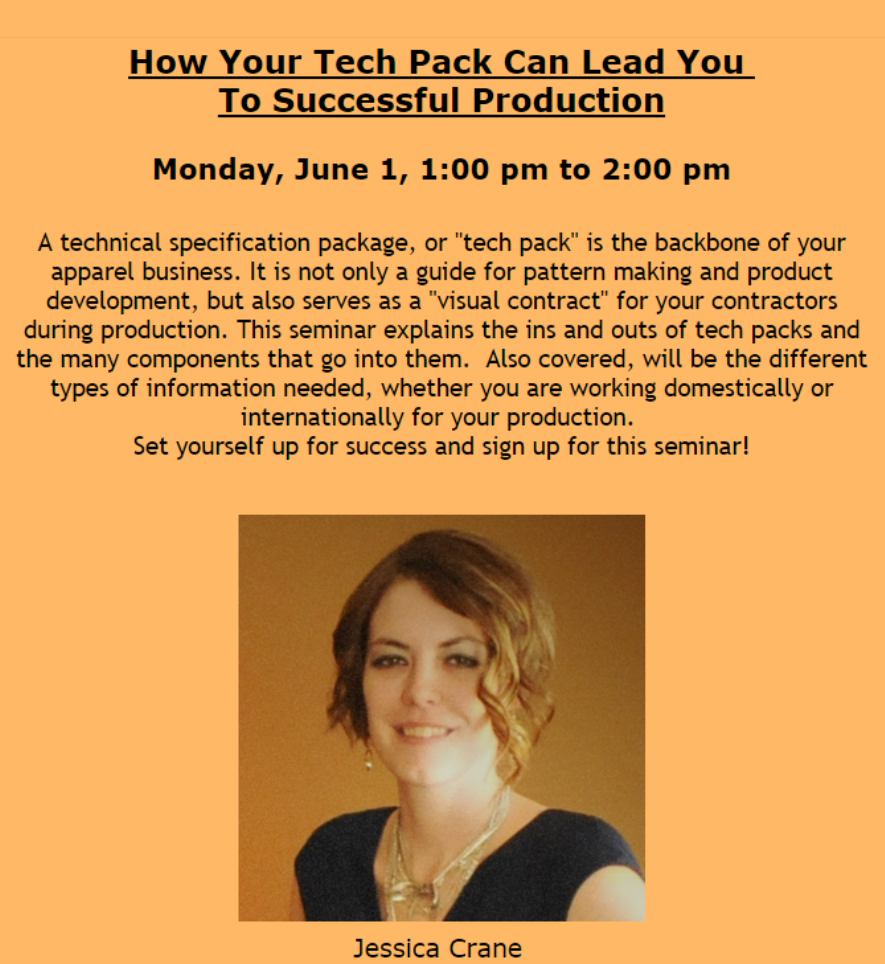
The Expo gave designers an opportunity to source materials in person while also learning more about the practical side of apparel development. Programming included topics such as patternmaking, product development, technical specifications, grading, marking, and working with production partners.
The Chicago Textile Expo returned in 2015. I was invited to present a seminar about tech packs, which are used to communicate garment details to a patternmaker, sample maker, or manufacturer. For emerging designers, this type of information can make a real difference in being able to move an idea toward production.
Events like this were valuable because they brought together things that are often hard to access separately: fabric and trim sourcing, technical education, business information, and industry relationships.
DG Expo at the Palmer House
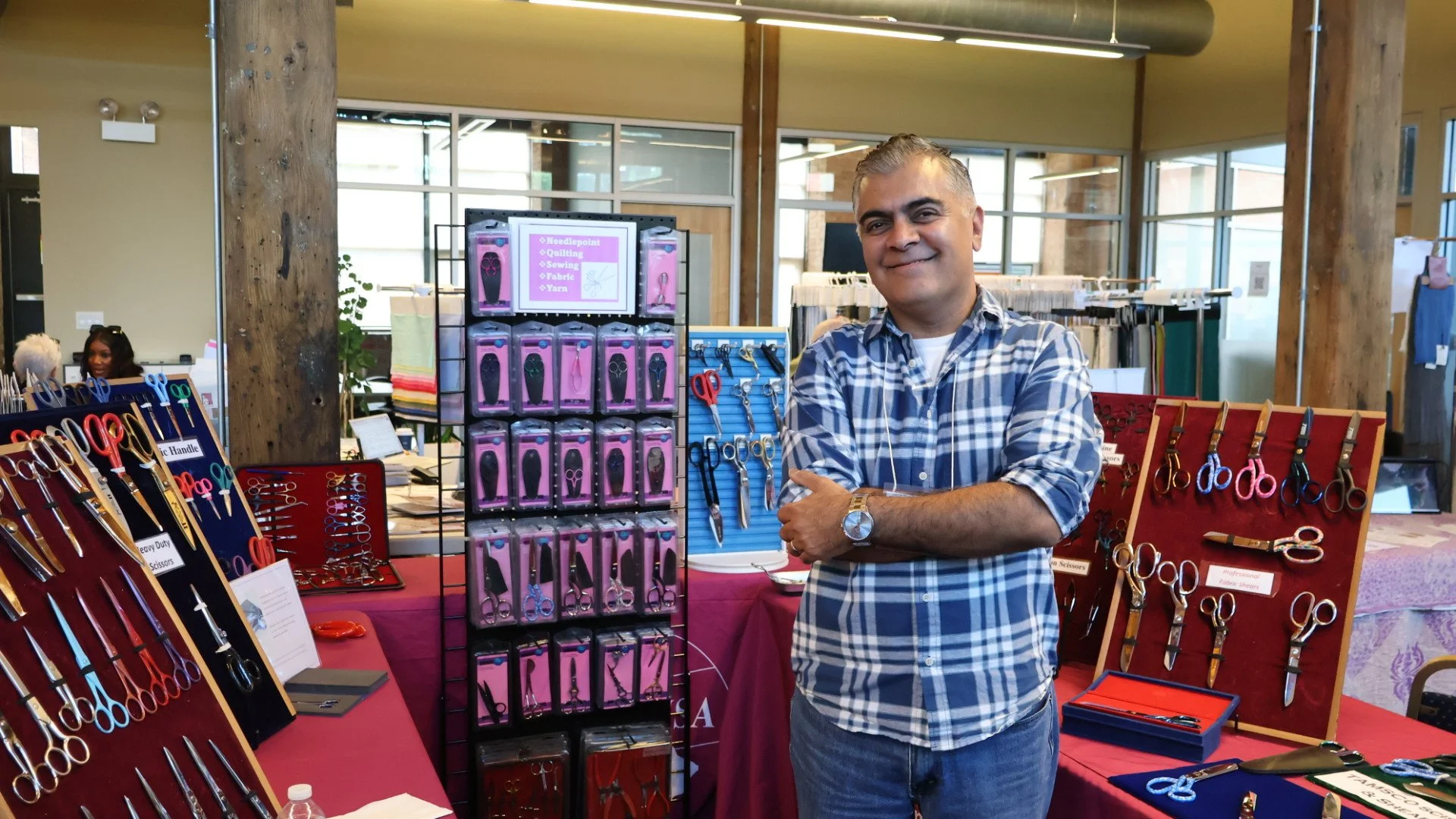
The Fabric Shows, formerly known as DG Expo, later brought another fabric-and-trim sourcing opportunity to Chicago. The show came to the Palmer House Hilton in 2017 and 2018, giving designers and sewn-products businesses a chance to connect with wholesale suppliers without having to travel to New York, Los Angeles, or another major market.
I had a booth at DG Expo when it came to Chicago. I remember it as an important opportunity for local businesses and independent designers to meet suppliers, look at materials, and make connections in person.
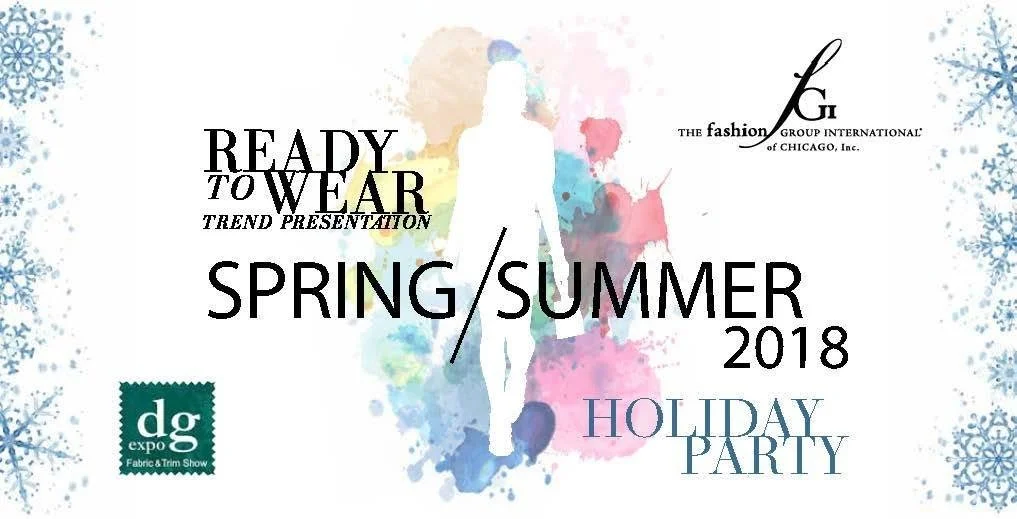
The 2017 DG Expo also included a Fashion Group International of Chicago trend presentation and holiday mixer at the Palmer House. It was one of those events where different parts of the local industry came together: people could attend the fabric show, hear about upcoming trends, meet new contacts, and continue conversations over the course of the evening.
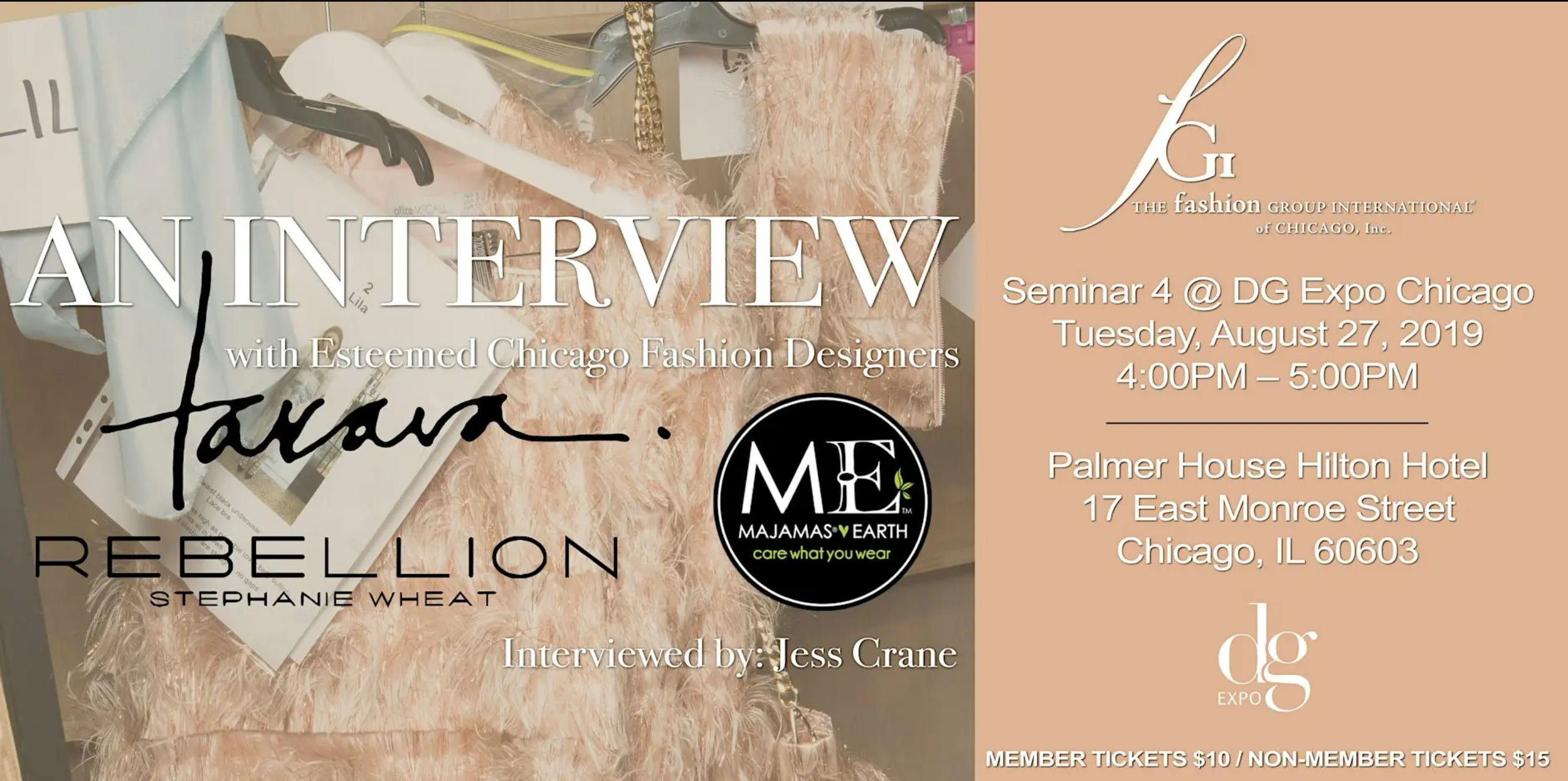
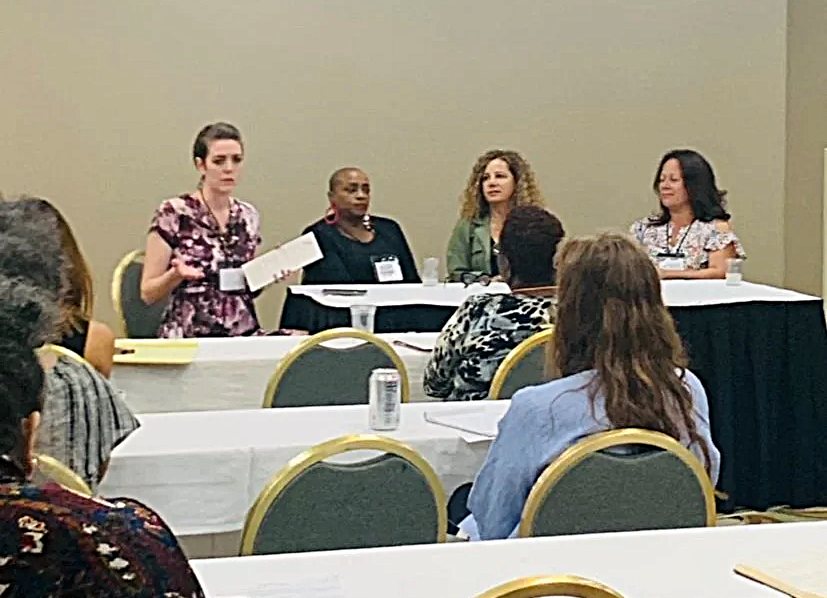
DG Expo returned to the Palmer House in 2018, and FGI Chicago continued to create programming connected to the show. In 2019, I organized and moderated “FGI Chicago x DG Expo: Interview with Esteemed Chicago Designers” at the Palmer House. I identified and invited three Chicago designers to share their knowledge, experiences, and stories with visitors to the Expo.
This type of programming matters because fashion is not built by one person working alone. Apparel businesses depend on relationships between designers, suppliers, technical professionals, manufacturers, retailers, educators, and others working across the industry.
A Midwest Meeting Place
These events were not limited to people who lived or worked in Illinois. Fabric and trim representatives traveled to Chicago from other locations, while designers, students, entrepreneurs, and businesses from across the Midwest could come here to source, learn, network, and connect with the Chicago apparel industry.
Chicago became a regional meeting place. For many people, coming to Chicago was more accessible than traveling to larger coastal markets. It allowed attendees to meet representatives, see materials, learn about production, and begin relationships that could help move their businesses forward.
That regional role is important when thinking about a permanent garment district. A Chicago apparel center would serve people throughout Illinois, but it could also become a Midwest destination for sourcing, education, manufacturing connections, and community.
What the Events Revealed
The Chicago Textile Expo and DG Expo were temporary events, but they showed that the need was there.
For a short time, a designer could meet a fabric supplier, ask a production question, attend a seminar, and learn about local resources. That is part of what a garment district does. It makes an industry easier to find and easier to navigate.
But when the events ended, the resources became scattered again. People exchanged business cards and made connections, but there was no consistent shared place where that momentum could continue year-round.
For emerging designers in particular, this can be difficult. Manufacturers, suppliers, contractors, sample rooms, and specialized service providers may exist, but they are not always visible or easy to access. People can spend years trying to understand who does what, where to source, and how to get a product made locally.
AIBI’s Pop-Up Garment District
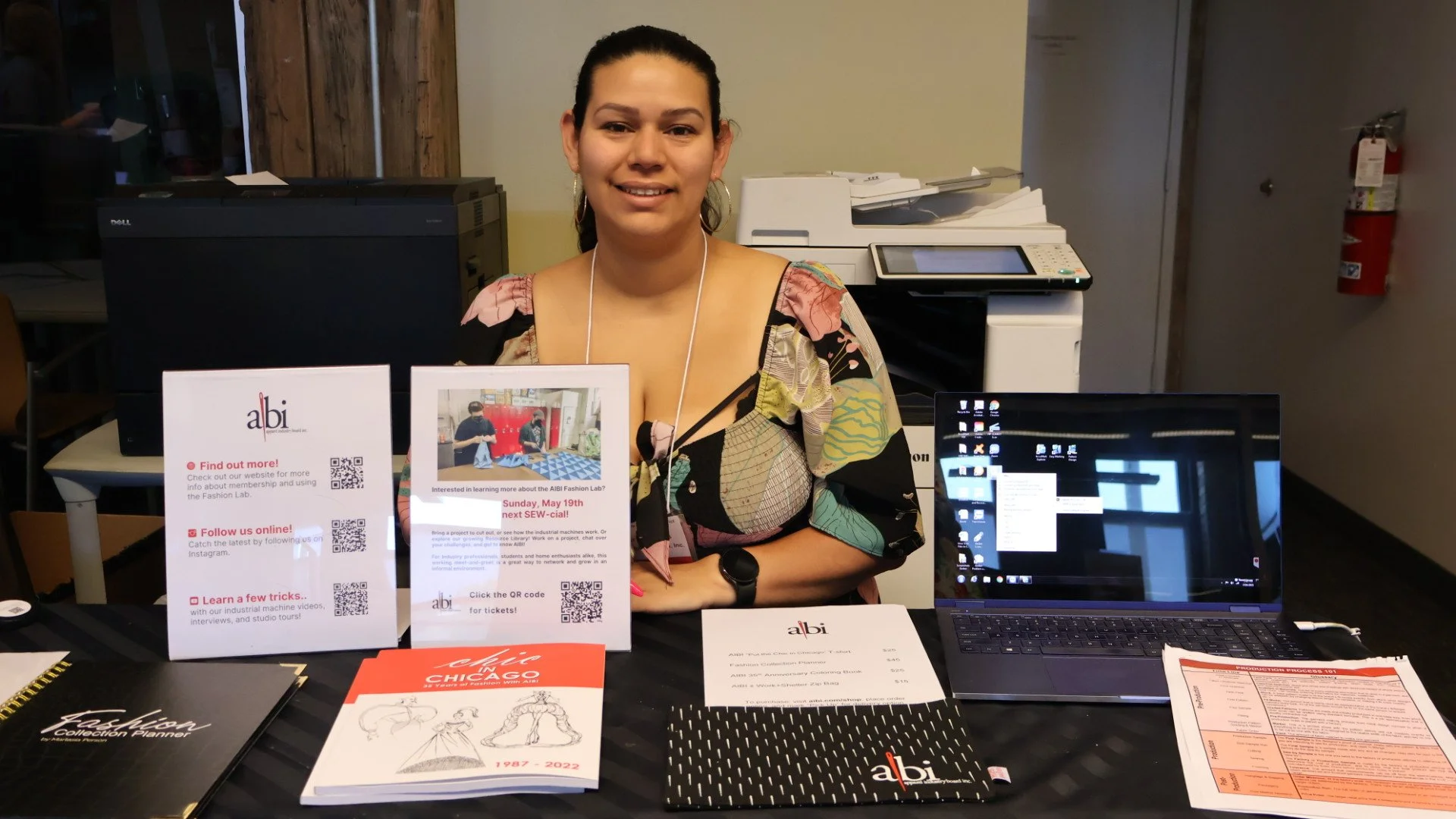
AIBI has been working to address this need through Chicago’s Pop-Up Garment District. In 2024, AIBI organized a two-day resource fair that it described as “Where Midwest Fashion Thrives,” bringing together designers, costumers, fabric stores, quilt and sewing businesses, business-to-business services, and wholesale suppliers with smaller minimums.[aibi][facebook]
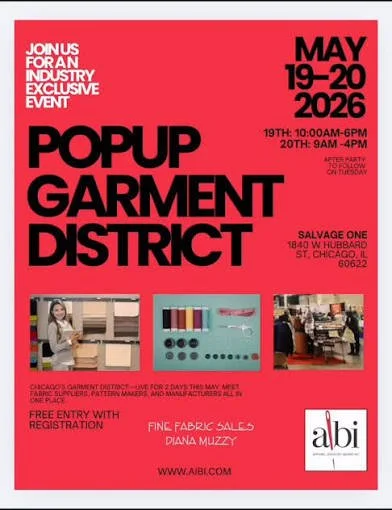
In 2026, AIBI partnered with Fine Fabric Sales for another Pop-Up Garment District event, bringing fabric suppliers, patternmakers, and manufacturers together in one place for two days. AIBI described that event as “Chicago’s Garment District—live for 2 days.”[givebutter][aibi]
I think this connection is important. Fine Fabric Sales helped host the Chicago Textile Expo years earlier, and now it is part of AIBI’s Pop-Up Garment District work. The same need has continued: Chicago’s apparel community needs more ways to find each other, share knowledge, and build businesses.
These events show that Chicago has the people and the interest to support a stronger regional apparel ecosystem. What has been missing is a permanent place to hold that momentum.
Why the Current Campaign Matters
I have been connected to AIBI since approximately 2006. When I was beginning my career after fashion school, AIBI was one of the organizations that made the Chicago apparel industry feel more accessible. It provided a place to meet people, learn about resources, and better understand the local sewn-products community.
Like many fashion-design graduates in Chicago, I found work in related areas including apparel and product development, technical design, merchandising, retail, and other adjacent roles. I eventually started my own business, providing apparel and sewn-product development services to clients throughout the United States.
Throughout that work, I tried to keep production in Chicago and in the United States whenever possible. I believe local manufacturing supports jobs, small businesses, and the industry knowledge needed to make products here. But I also experienced how difficult it could be to find the resources needed to do that work locally.
AIBI’s current “It’s Time for a Garment District” campaign is an effort to make this type of access permanent. The campaign says it is working to build the place where Chicago’s next generation of fashion businesses begins.[givebutter]
A permanent garment district or apparel center could give Chicago a visible home for sourcing, production support, education, workshops, business development, networking, and public programming. More importantly, it could make the industry feel less hidden and less dependent on private connections.
Support the Campaign
Chicago does not need to create an apparel community from nothing. It is already here.
The Chicago Textile Expo, DG Expo, FGI Chicago programming, Fine Fabric Sales, AIBI’s Pop-Up Garment District, and the work of countless designers and industry professionals all show that Chicago has been building toward this idea for years.
A permanent garment district would give that work a place to grow.
To support AIBI’s campaign through my fundraising page, please visit: It’s Time for a Garment District — Jess Crane.
Why Illinois Fashion History Begins Here
A family farm in Will County, agricultural-history research, and unexpected fashion advertisements helped shape the beginning of Illinois Fashion History.
I have always been interested in the stories of the people who shaped where we are and what we have today.
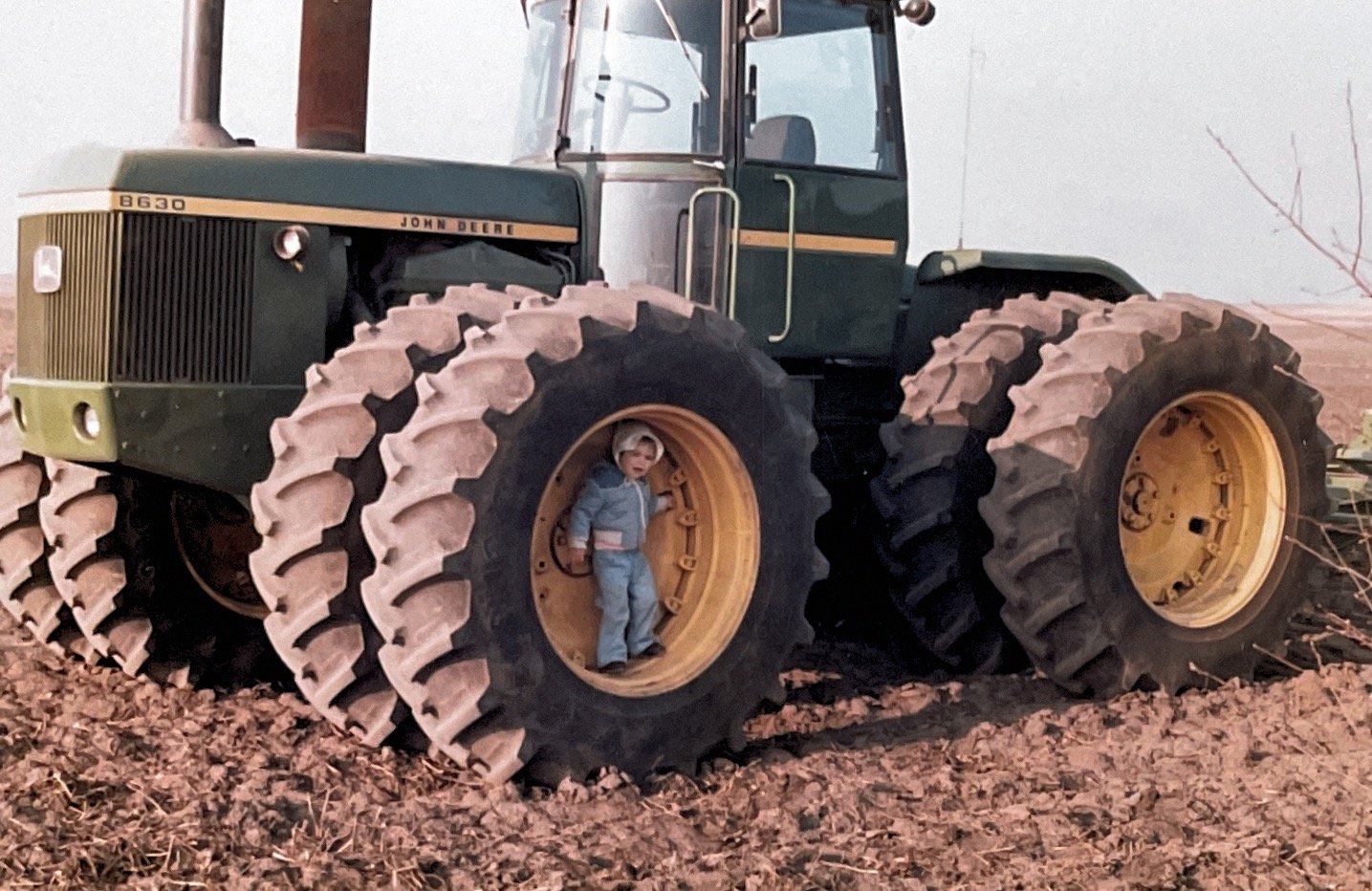
That interest began close to home. I was born and raised on a family farm in Will County, Illinois, now recognized as a centennial landmark. I remember the old equipment in the barn—tools made for horse- or ox-drawn work, saddles, reins, and the particular texture and patina of the wood. Today, people often seek out or recreate that farm aesthetic, but those objects were once simply part of everyday life: evidence of the work, skills, and people who came before us.
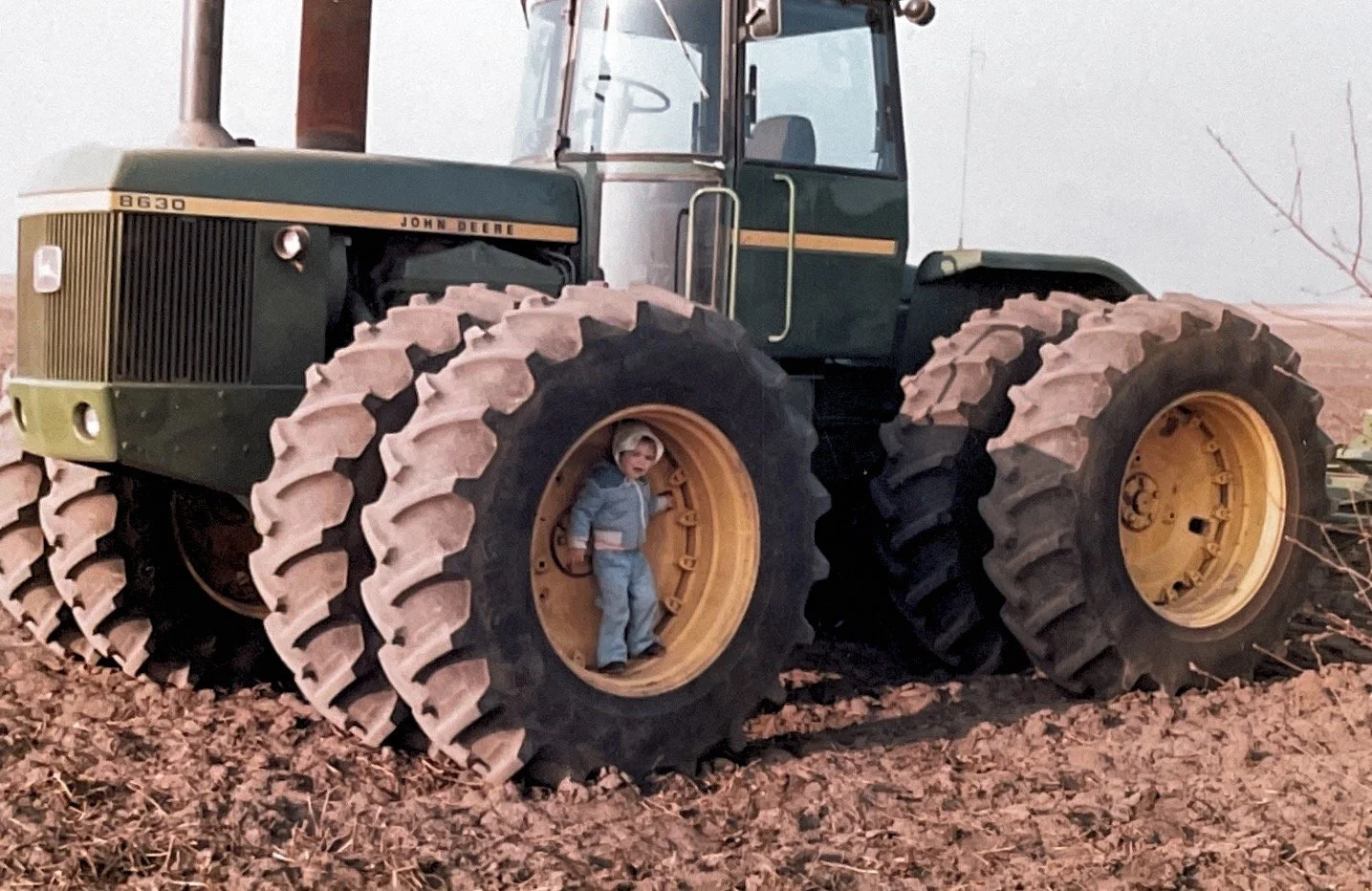
Jess Crane looking fashionable as a child standing in the rim of a tractor tire.
My own family-history research deepened that curiosity. As I traced my family tree and learned more about the place where I grew up, I became increasingly interested in how histories are preserved, who gets remembered, and what can disappear when no one takes the time to document it.
That perspective has shaped my work with the Will County Threshermen’s Association, a nonprofit organization dedicated to restoring and maintaining historical agricultural equipment. What began as help with its website grew into a broader collaboration around communication, community engagement, and sustainability. The association brings historic machinery into public programs throughout the year and hosts its four-day Antique Tractor & Steam Engine Show each July, inviting visitors to explore the grounds, see equipment demonstrations, experience tractor pulls, and learn from working steam engines and sawmills.
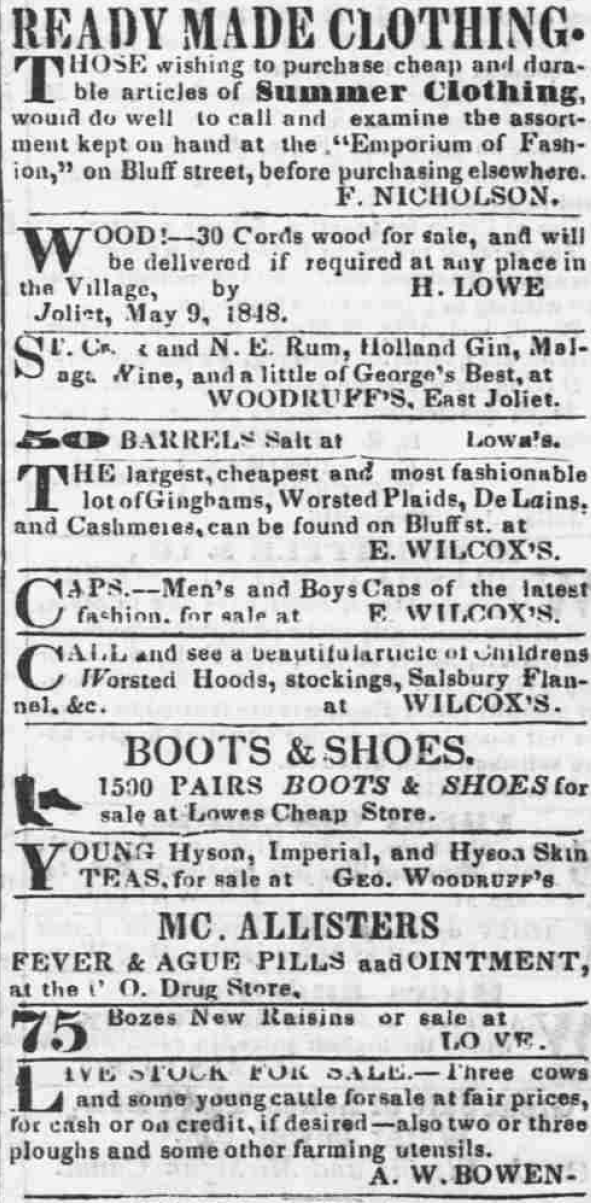
Joliet Signal, Volume 6, Number 10, 15 August 1848
While researching the association’s history, I looked through archived issues of the Farmers Weekly Review available through the University of Illinois Urbana-Champaign. I was searching for past articles and advertisements related to earlier Threshermen’s shows as they moved through Will County. Alongside that research, I found something unexpected: advertisements for apparel, sewing patterns, catalog ordering, and local clothing specialists.
Those small discoveries were a turning point. They reminded me that fashion history is not limited to major cities, famous designers, or formal institutions. It is also found in local newspapers, business advertisements, community events, family collections, organizations, and the everyday lives of people across Illinois.
Illinois Fashion History grew from that realization.
The initiative is dedicated to researching, documenting, and sharing the people, organizations, businesses, and industry that have shaped fashion in Illinois. Chicago is an essential part of that story, but it is not the whole story. Illinois Fashion History will explore histories from across the state, while recognizing that the research may sometimes extend into the Midwest and beyond.
My work with Apparel Industry Board, Inc. Chicago and Fashion Group International Chicago has also shown me the depth of the local fashion community’s history. AIBI began in 1987, and FGI Chicago dates to 1934. While serving on the committee for the 10th FGI Chicago Rising Star Awards—held after a ten-year hiatus—I began looking for past recipients, sponsors, organizers, and records of the program. That research has made clear how much there is still to uncover. I hope to pursue more of FGI Chicago’s history after completing my current two-year term as Regional Director.
In 2022, I worked with then–AIBI Executive Director Ambar Campos to create a coloring book featuring sketches by Chicago designers who had been involved with AIBI over the years. The project served as a fundraiser for the organization’s 35th anniversary. Today, I am working on a 40th Anniversary coffee-table book for AIBI and preparing historical displays for its Spring 2027 anniversary gala.
Illinois Fashion History is about looking back, but it is also about recognizing the history being made now. The people working to sustain, grow, teach, design, organize, and advocate for Illinois fashion today are part of that record, too.
I am excited to continue researching the past, preserving stories, and creating opportunities for the people shaping the local fashion industry now.